A person’s given name is Robert, but he would rather be called Bob. It’s reasonable to think people would honor his preference, said Traci Gillig. And yet, there are many who struggle applying this common courtesy to pronouns.
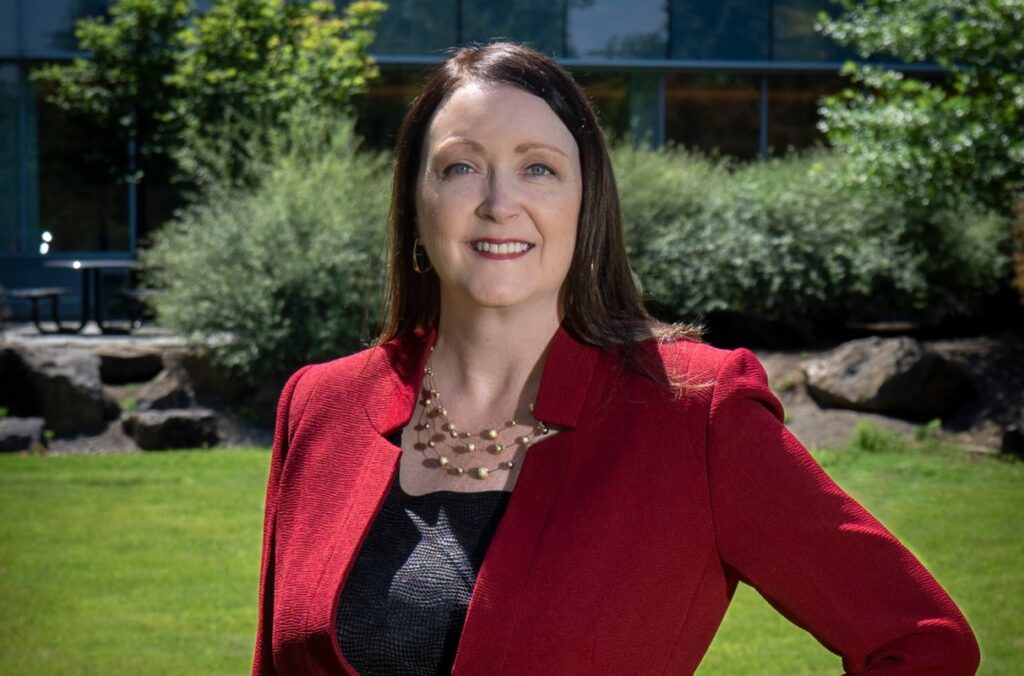
An assistant professor in the Murrow College of Communication, Gillig, whose pronouns are she/they, focuses their academic work on issues related to gender and mental health.
“If someone expresses they would like to use certain pronouns, that’s something about their identity that should be respected,” said Gillig. “It can be a little bit of an adjustment for people, but once you use those pronouns a few times it gets easier to incorporate into daily language,” they said.
Gillig has spent nine years conducting research at a summer leadership camp for LGBTQ+ young people. Though they haven’t researched a connection between pronoun use and mental health, they’ve witnessed how “incredibly important” pronouns can be in helping align a young person with their identity while at camp.
The Trevor Project, a nonprofit advocacy, education and service organization, surveyed LGBTQ+ young people (ages 13–24) and found that 25% use nonbinary pronouns.
“In my teaching I have a lot more students who use they/them pronouns than in the past,” Gillig said, “but I’ve also seen more pushback to sharing pronouns in class.”
Opposition to gender neutral pronouns is stratified by age, religion, education and political leanings, studies have shown. For instance, 61% of younger U.S. adults said they’d be comfortable using a gender neutral pronoun if they were asked to do so; that dropped to 46% among adults ages 50–64.
Gillig and others suggest that sharing pronouns routinely is one key to increasing comfort and inclusivity in schools and workplaces. Give people an opportunity to state their pronouns at the start of meetings, for example. Provide nametags that indicate someone’s pronouns along with their name. Put pronouns on email signatures.
It’s a matter of respect, Gillig said.
“The better nuance you have in language, the better you are able to share how you experience yourself and the world around you,” they said. “It’s the beauty of language.”
October 18 is International Pronouns Day, a grassroots effort to make respecting, sharing, and educating about personal pronouns commonplace.