Every year, around 100 migrant and seasonal farmworkers enroll in the Washington State University High School Equivalency Program (HEP) and, during eight weeks, they take classes in writing, reading, science and math.
The program, offered by the College of Education, provides students with instruction and counseling to prepare them to pass the GED test, equivalent to a high school diploma.
“Participants in this program pave their way to get jobs other than agricultural and to continue their education at a technical school, community college or WSU,” said Dennis Warner, director of the WSU High School Equivalency Program and associate dean of the College of Education.
Migrant and seasonal farmworkers and their children or dependents qualify for the program if they are 17 years of age or older and have not finished high school. Since all instructors are bilingual, classes are offered in Spanish too, depending on the student’s preference. GED tests can also be taken in Spanish.
In addition to meeting the educational needs of migrant and seasonal farmworkers, the program provides WSU students with the opportunity to tutor and mentor participants. About 40 students, mostly from the teacher education program, serve as volunteer tutors during each session.
The program runs four sessions annually and, for two months, participants move into a WSU dorm for a real immersion in college life. Besides their daily classes from 8 a.m. to 4 p.m., participants also attend other university activities, including WSU athletic events, plays and activities organized by the Multicultural Student Center.
“By interacting with WSU students and learning about university life, participants start seeing themselves as potential university students,”
Warner said.
The first 2006 session, starting Jan. 8, already has 28 students enrolled.
“The classes in August are small because people are working in the fields. We have more applicants during the winter,” said Jessica Suarez, a bilingual instructor for the program.
To help students succeed, the program covers tuition, supplies, housing and food costs, and includes a weekly allowance of $20. Students also receive academic, vocational and career counseling.
“Most current high school equivalency programs are commuter programs. Our program at WSU is unique because we house students on the campus of a major university during their entire HEP experience,” Warner said.
“Students from migrant and seasonal farmworker backgrounds have often struggled in the public school system because they have moved from school to school so often and have frequently had to work in the fields instead of attending school classes. These young people don’t lack the ability to learn in a classroom setting—they have lacked the opportunity. Our university-based HEP provides that opportunity.”
The WSU HEP is the oldest high school equivalency program in the nation, having received ongoing funding from the U.S. Office of Education since 1967, the date the first high school equivalency programs were established.
More than 2,900 participants have received their GEDs through WSU’s program since 1967. The last report from the College of Education, completed in 2004, shows that over a five-year period, 414 people enrolled in the program. From those, 77.8 percent declared themselves to be of Hispanic origin, 21 percent Native American and the rest were African-American (0.7
percent) and Caucasian (0.5 percent). Half the students chose to receive the instruction in Spanish.
In a follow-up study for the same time frame, 91 students decided to continue their studies in post-secondary education institutions or technical schools and 78 went to work in careers other than agricultural work.
After continuing their education, many HEP graduates become some of the best recruiters for the program. Former HEP students who have referred new student applicants include an English as a second language specialist at North Central Educational School District in Wenatchee, a nurse for the Washington State Department of Health on assignment in the Skagit Valley, two sisters who work at Columbia Basin Health Clinic in Othello and a husband and wife team who have sent their children to WSU as college students.
Enrollment for the program continues through the year. Ron Rosebrook, the WSU HEP recruiter, helps potential students through the application process and answers questions regarding any aspect of the program. For more information about how to enroll in the WSU High School Equivalency Program, contact Rosebrook at (509) 335-5121, rosebruk@wsu.edu.
Next Story

WSU Global Campus student ambassador shines during #CougsGive Day
Aunjelique Andersen, a fully online student pursuing her degree in Media Innovation, ranked first on the #CougsGive Ambassador Leaderboard, inspiring 54 gifts through her outreach.
Recent News

WSU SURCA undergraduate researchers earn 65 awards
Seventy‑three students who participated in the Showcase for Undergraduate Research and Creative Activities 2026 were awarded prizes totaling $14,000.
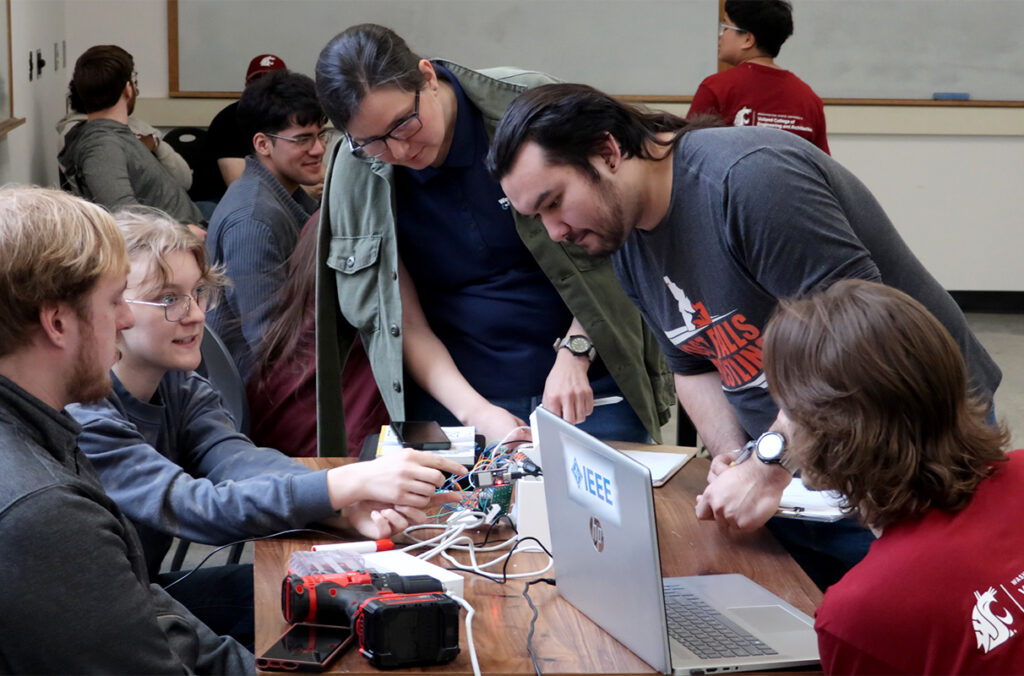
Inside WSU’s student-run hackathons
Hackathons have become a defining space for student innovation, with two taking center stage this year.
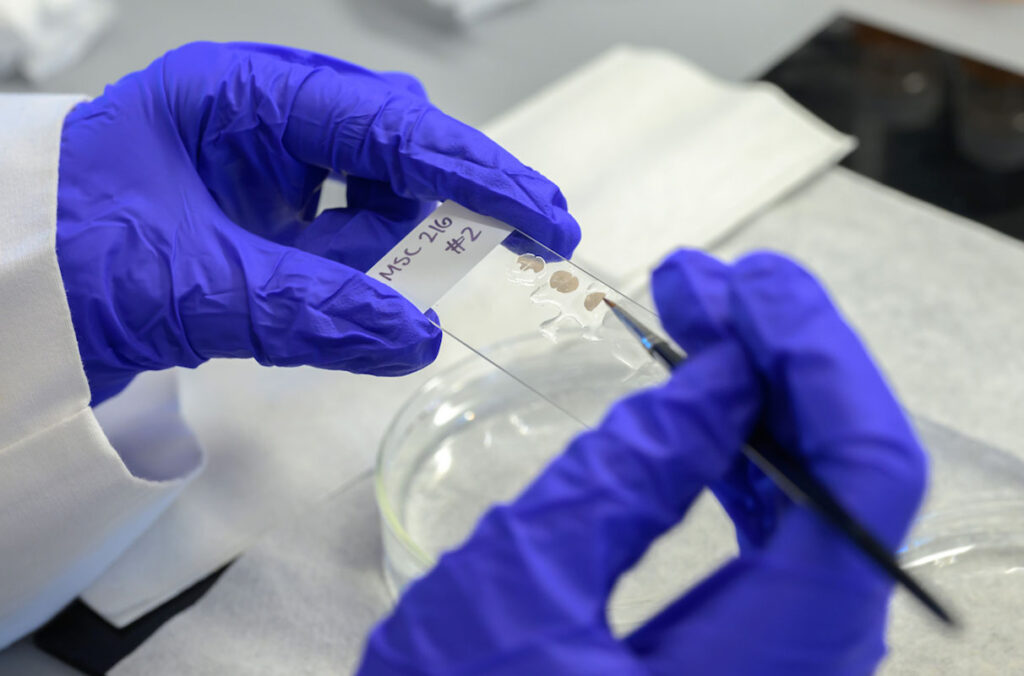
Undergrad researchers drive discovery in the College of Veterinary Medicine
Hands‑on research opportunities in the college are enabling students to contribute directly to major discoveries, including a recent Nature study.
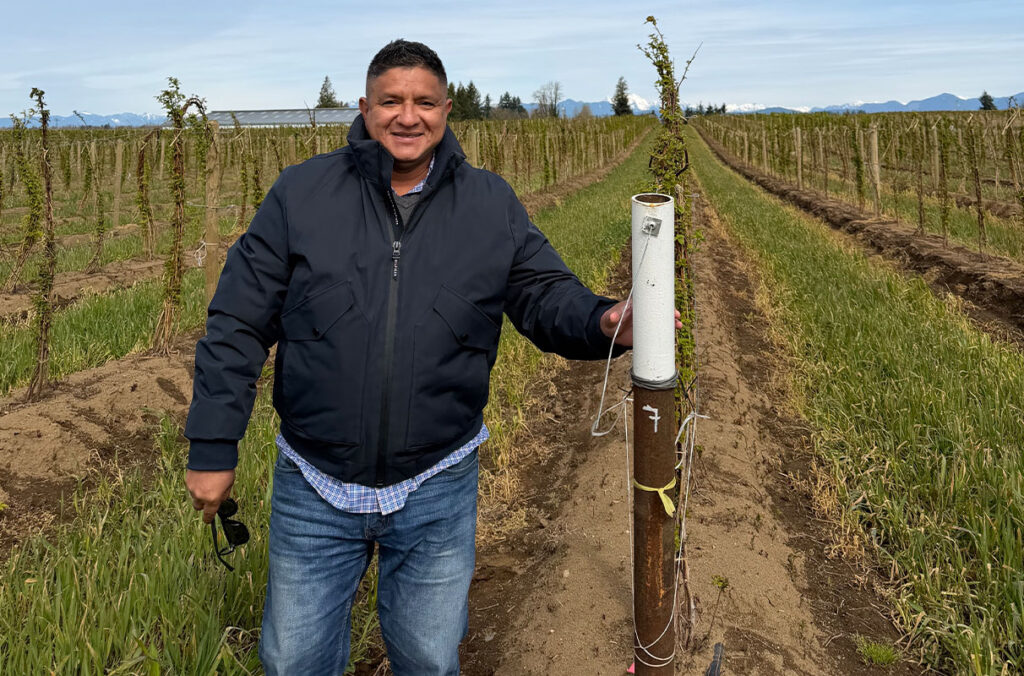
New WSU raspberry breeder to continue career goal of helping farmers
Germán Sandoya-Miranda aims to develop improved varieties and work closely with growers to help Washington farmers boost yields and adapt to evolving challenges.
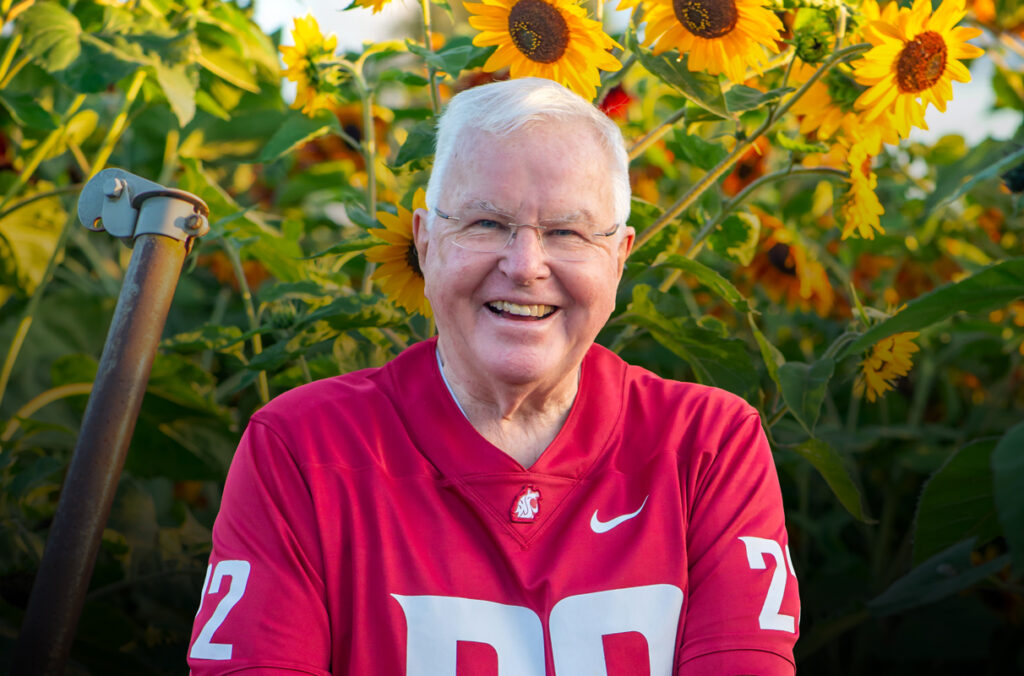
WSU Regent, longtime civic leader Sam Hunt dies following battle with leukemia
Hunt, a 1967 WSU graduate, devoted more than five decades to public service, education, and civic leadership across Washington.
WSU recognized for support of first-generation students
The university’s elevation to FirstGen Forward Network Champion reflects growing enrollment, improved retention, and expanded support programs helping first-generation students succeed.