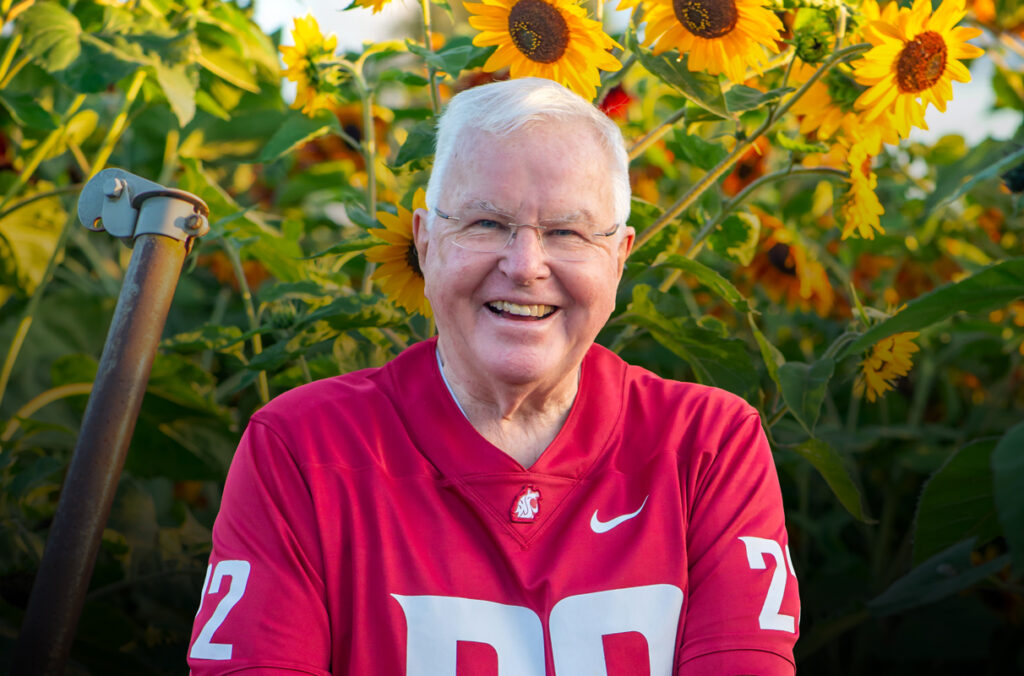
When Larry Schrader went off to college from the Kansas livestock and grain farm where he was raised, he intended to return and spend his life working the farm.
But after exposure to soybean research at Kansas State University in Manhattan, Kan., he embarked on a career of research and academics.
He became dean of the College of Agriculture and Home Economics at Washington State University in the early 1990s and now is a research professor at the WSU Tree Fruit Research and Extension Center in Wenatchee, where he has been the leader in some interesting inventions.
Two of them, both related to helping growers combat sunburn damage to apples, also will help growers use less water in this drought year.
One of them is RAYNOX, a waxy liquid sprayed on apples to protect them from sunburn.
During drought, Schrader says, RAYNOX can be used instead of the daytime misting or sprinkling of fruit to protect it from sunburn.
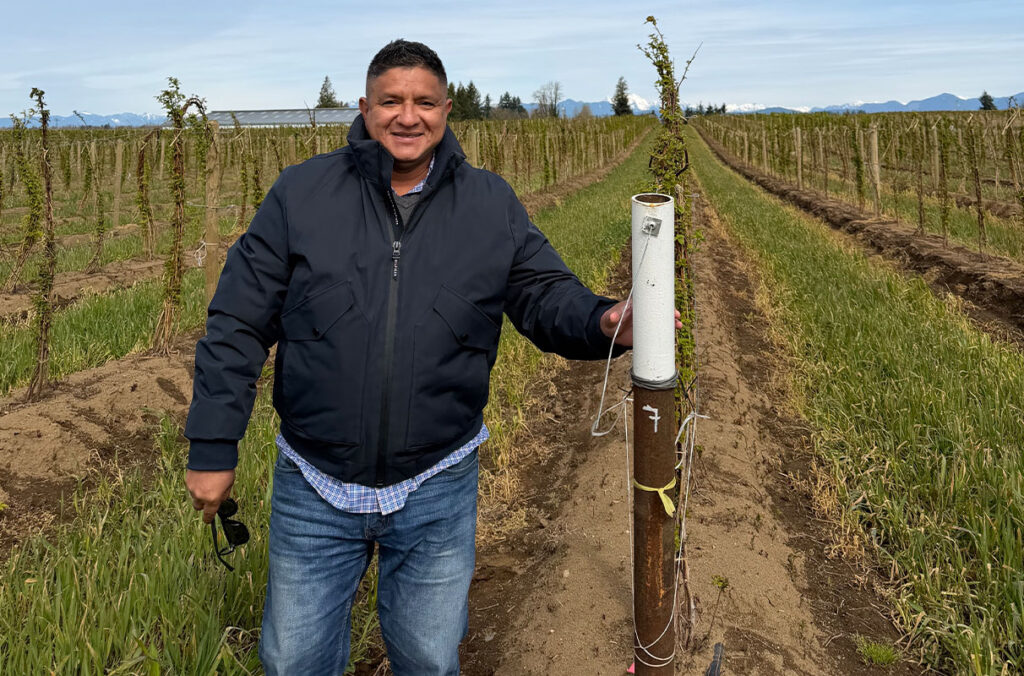
The other invention is a sensor to tell when apples are getting hot enough that they need to be misted with water, a practice commonly called evaporative cooling. The sensor helps control the timing and duration of the cooling, making it more efficient and saving water. Too much daytime moisture causes mildew and skin problems like flecking on Fujis.
Schrader is looking for a few more growers for final testing of the sensor this summer.
A third invention Schrader is testing, called RainGard, protects cherries from splitting after rain.
Like RAYNOX, RainGard is a natural waxy emulsion sprayed on cherries to help them repel rain water. Rains close to harvest can ruin crops. Cherries absorb the rain and then split when the sun comes out and temperatures rise.
$100 million lost to sunburn
Schrader estimates 8 to 10 percent, or about $100 million, of Washington’s apple crop is lost every year to sunburn.
In 1996, Schrader discovered the surface temperature on the sun-exposed side of an apple on a tree can be 20 to 25 degrees higher than air temperatures during the hottest time of the day.
“When that fruit surface temperature reaches 126 degrees, thermal death occurs. Those exposed cells die and you get necrosis, a black spot of dead cells, and then you have a cull,” Schrader said. “It only has to be that temperature for 10 minutes.”
In 1997, Schrader and his then-research technician, Rudy Kammereck, invented RAYNOX. A company they tried to get to manufacture it came up with the name based on the fact the product knocks the sun’s rays.
It’s a waxy liquid made from Carnauba wax, a natural ultraviolet B blocker, found on leaves of Carnauba palm trees in northern Brazil.
Sprayed on apples, they found it reduces sunburn by an average of 50 percent.
Commercial sales began in 2003 and RAYNOX is now used on about 30,000 of the state’s 200,000 acres of apples, Schrader said.
On Feb. 22, Schrader received his RAYNOX patent. He has applied for patents for RainGard and the sensor.
The importance of it all, he said, comes back to quality.
“We are in a global economy,” he said.
“The best way for us to compete is to have the highest quality product.”
Reprinted with permission from Dan Wheat, staff writer for the Wenatchee World and a 1977 WSU graduate.