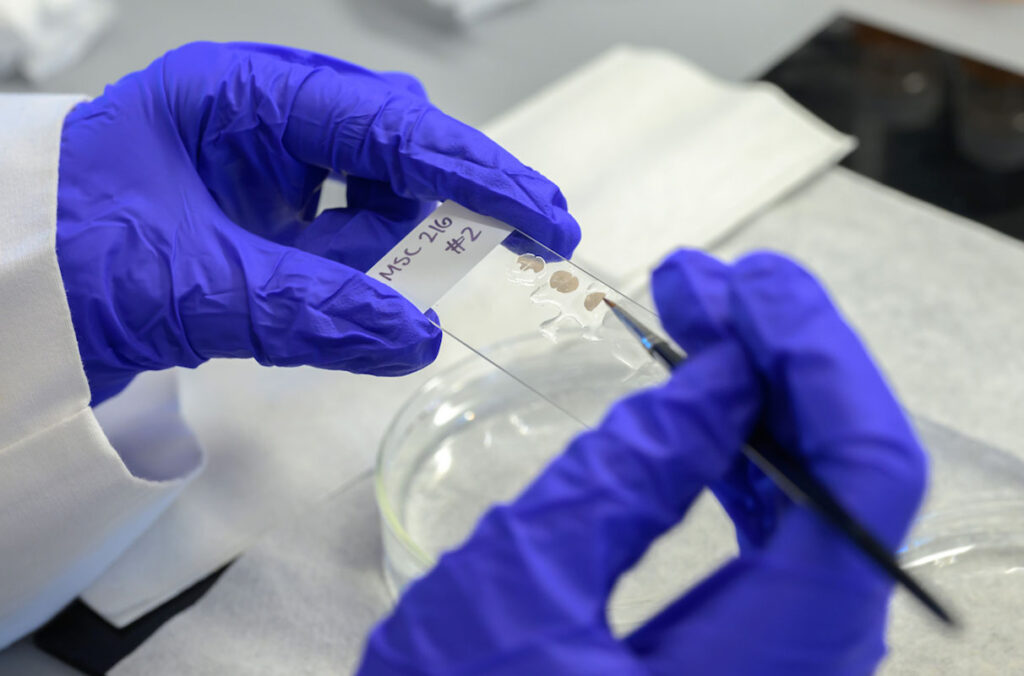
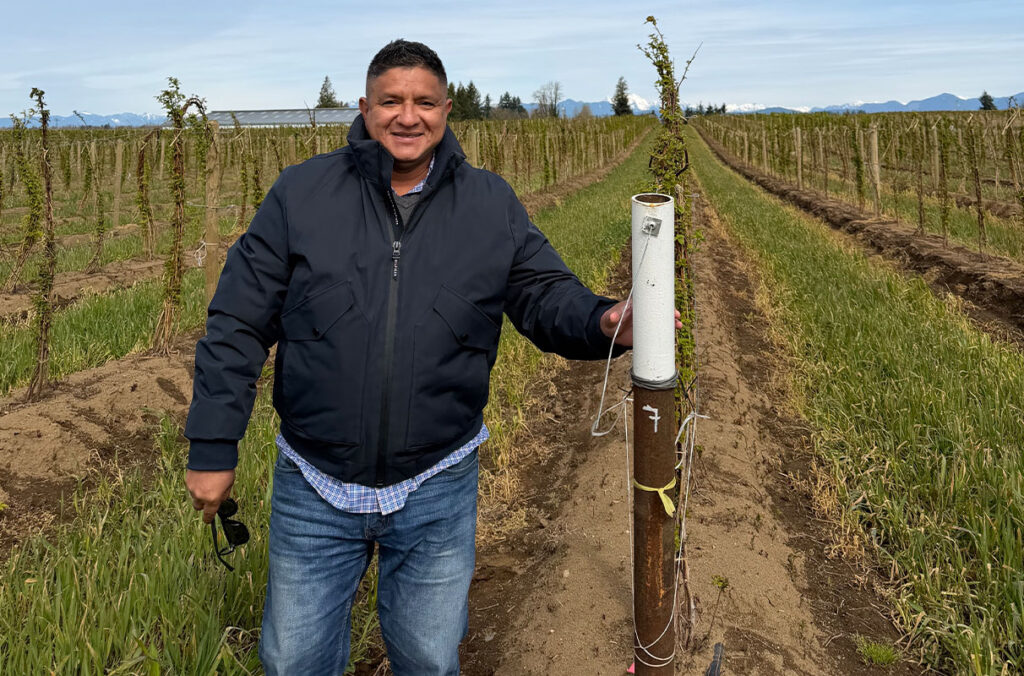
WSU horticulture PhD student and symposium organizer Jessica Gigot presents her research, “Dynamics of soil-borne pathogens and alternatives to fumigation in raspberry.
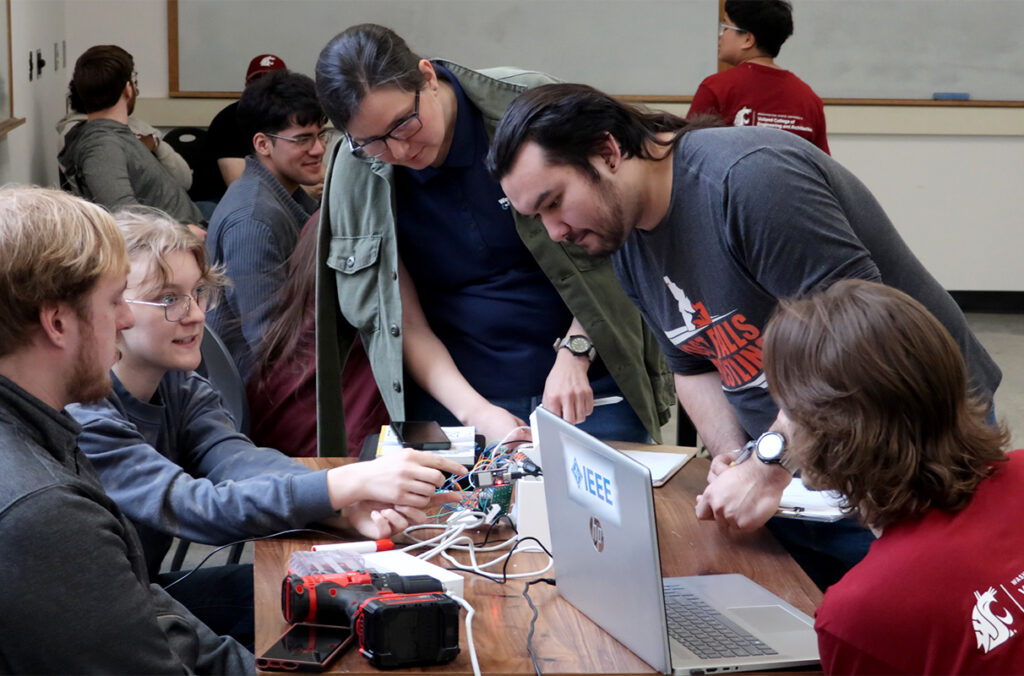
MOUNT VERNON – Nine WSU grad students, as well as three University of Washington students, presented results on Nov. 10 of their northwest Washington research projects. The forum was a daylong symposium at the Northwestern Washington Research and Extension Center (NWREC) titled “Agriculture and Northwest Ecosystems: A Graduate Student Symposium.”
 |
Jones |
Steve Jones
, director of the WSU Mount Vernon Northwestern Washington Research and Extension Center, said that increasing graduate student participation in hands-on research is a big part of the center’s future.“The future of WSU Mount Vernon is continued growth, and excellence,” says Jones. “One way we’re doing that is through increasing our graduate student numbers.”
Currently 11 graduate students are working at the center, most working toward their PhDs, and Jones says that by next summer he hopes to expand that number to 15.
Topics were related to sustaining agriculture, farmland and the environment in the northwest corner of the state.
The audience included not only their peers, but also NWREC scientists, a number of county Extension directors, and local growers and interested community members.
Jessica Gigot, a WSU Horticulture grad student and one of the symposium’s main organizers, says the community interaction is important to both local growers and the students.
“One of the big benefits of this event is that students get to interact with community members and farmers,” says Gigot. “They get perspective on their research and understand the broader applications of what they’re doing.”
Jones echoes Gigot on the importance, and relevance, of the student’s research.
“They have the unique opportunity to live in the farming communities they are serving through their research, and that’s incredibly valuable,” Jones says. “They are working on research that’s relevant to the Northwest counties of the state and just doing incredible work. They are working directly with the farmers on helping ensure the economic and environmental viability of farming in this part of the state.”
 |
Inglis |
Debbie Inglis
, plant pathologist at the NWREC and a faculty organizer of the symposium, beamed with pride as she took the podium to sum up the day, telling the student presenters “the sign of a good symposium and good presentations is getting really good questions, and you all generated really good questions. You’ve truly inspired me.”For more information and photos of the exhibit, click the following link.