|
| Claiborn |
WSU’s recent receipt of two grants has “lifted our graduate and research programs to a new level,’’ according to Candis Claiborn, dean of the College of Engineering and Architecture.
“This puts us in an elite position in the United States,” agreed Howard Grimes, vice president for research and dean of the Graduate School.
The National Science Foundation grants will provide $6 million over five years for approximately 60 new doctoral students to conduct cutting-edge research. The funding is from NSF’s flagship Integrative Graduate Education and Research Training (IGERT) interdisciplinary program.
Funding will be used to develop two multi-disciplinary doctoral programs in critical research areas of the environment and health.
The environmental IGERT program will focus on the nitrogen cycle while also providing unique training in policy studies. The second program will concentrate on health-assistive, smart environments.
Environmental program
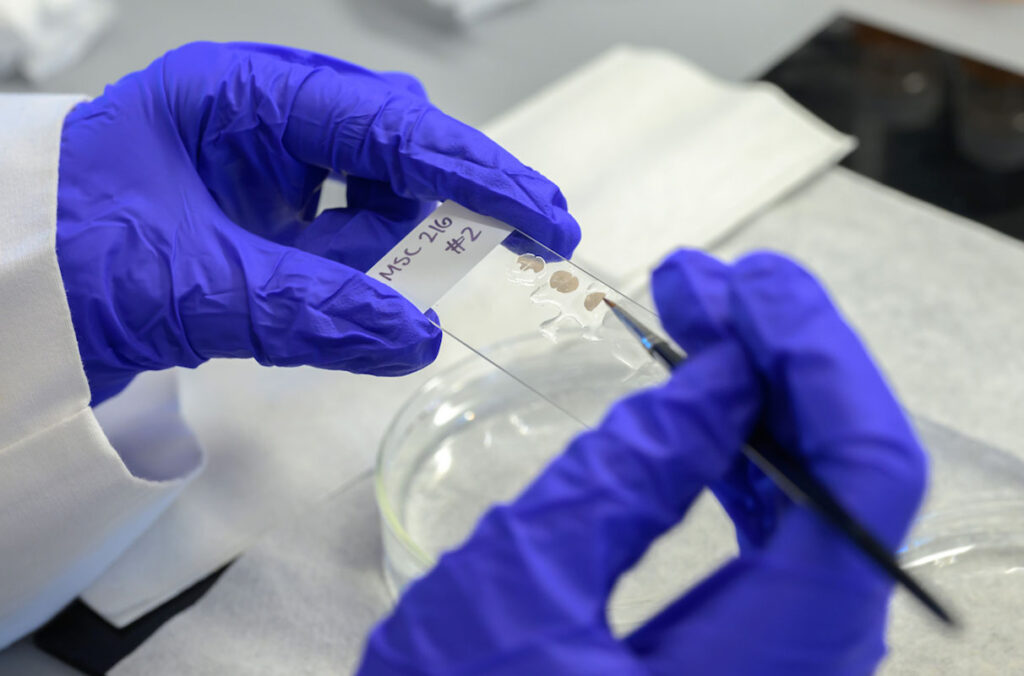
Nitrogen plays an important role in climate change, air and water quality, and ecosystem health, said Brian Lamb, primary investigator on the environmental grant and Regents professor in civil and environmental engineering. Nitrogen-cycle management is listed as one of the most critical 21st century “grand challenges” by the National Academy of Engineering.
The amount of nitrogen in the environment has risen by 120 percent in the past 40 years, due largely to the use of synthetic fertilizers. While fertilizers have helped feed and increase the affluence of societies around the world, changes to the nitrogen cycle are causing dramatic and poorly understood impacts.
The graduate training program will bring together WSU science and engineering students and faculty to improve understanding of the cycle and nitrogen management from an interdisciplinary perspective. The program will be a core effort within the interdisciplinary Center for Environmental Research, Education and Outreach (CEREO),
In addition, students will receive unique training in policy studies, participating in a semester-long studio course that will immerse them in policy and communication issues.
“Many of our policy decision-makers are aware of nitrogen, but may not fully appreciate the complexities of the nitrogen cycle and the impact it has on many environmental processes,’’ Lamb said. “Yet many of these same decision-makers have to devise policy strategies that are affected by and impact the whole cycle.’’
Students also will do in internships in policy organizations, such as the International Nitrogen Initiative or the World Meteorological Organization.
Health program
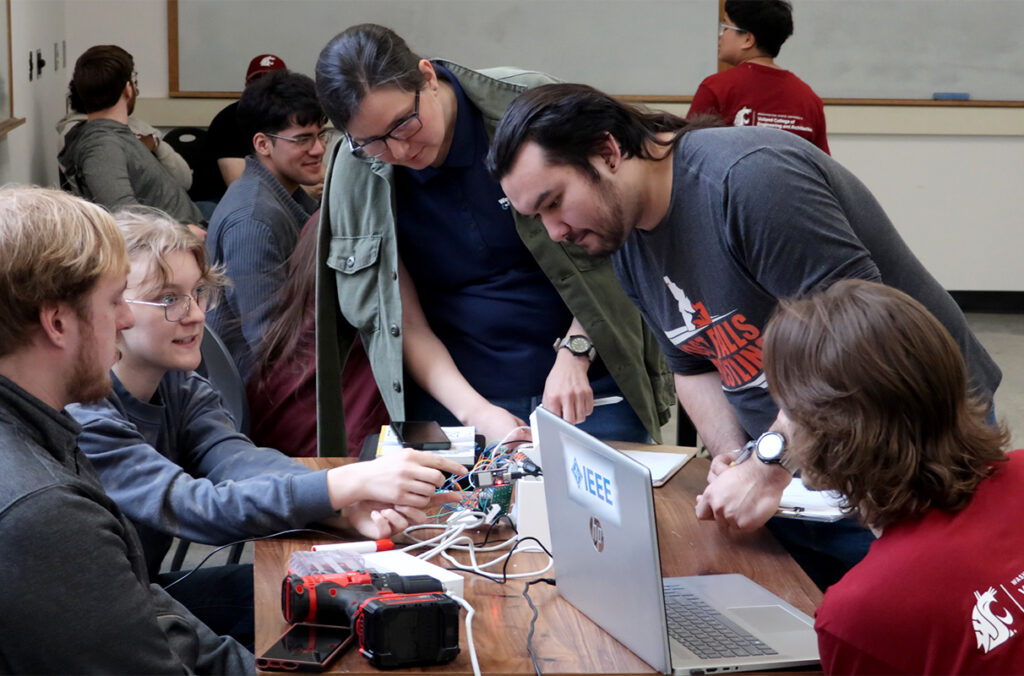
The second IGERT program is focused on health-assistive, smart environments. It will provide doctoral students with integrated training in computer science, electrical engineering, mechanical engineering, psychology, sociology and health care.
Diane Cook, Huie-Rogers Chair and professor of electrical engineering and computer science, is the primary investigator.
Participants will conduct research to address such questions as:
Whether technology can automatically monitor and analyze human health and behavior
Whether it can simulate human behavior and activities
Whether it can enhance human physical and cognitive abilities
Whether these technologies can be accepted by society
Students will gain real-world experience through internships and will understand user needs by living in on-campus smart environments.
The program will partner with on-campus REU (research experience for undergraduates) site programs to involve students from underrepresented groups.
Other faculty members on the project include Larry Holder, Behrooz Shirazi, Maureen Schmitter-Edgecombe and Sankar Jayaraman.
“For WSU to receive two of these prestigious IGERT grants in one year is unprecedented,” said Claiborn.
“The students who are recruited and trained will be tackling some of the most challenging issues of our times, and they will study them from a unique, integrated and birds-eye view that the IGERT program provides,” she said.
“The end result will be a significant number of graduates who will bring this big-picture perspective to their careers, whether they go to national laboratories, industry, universities or elsewhere.’’
“These IGERTS are an immense step forward in meeting the strategic goals of the Graduate School and Washington State University,’’ Grimes said.