Michael Morgan, WSU Vancouver psychology professor
VANCOUVER A WSU Vancouver research project analyzing the use of
cannabinoids in conjunction with medications like morphine to control pain has received $148,438 from the National Institutes of Health.
cannabinoids in conjunction with medications like morphine to control pain has received $148,438 from the National Institutes of Health.
The two-year grant to Psychology Professor Michael Morgan will focus on “Neural Mechanisms for Enhanced Cannabinoid/Opioid Antinociception.” The grant is part of the American Recovery and Reinvestment Act of 2009 (ARRA).
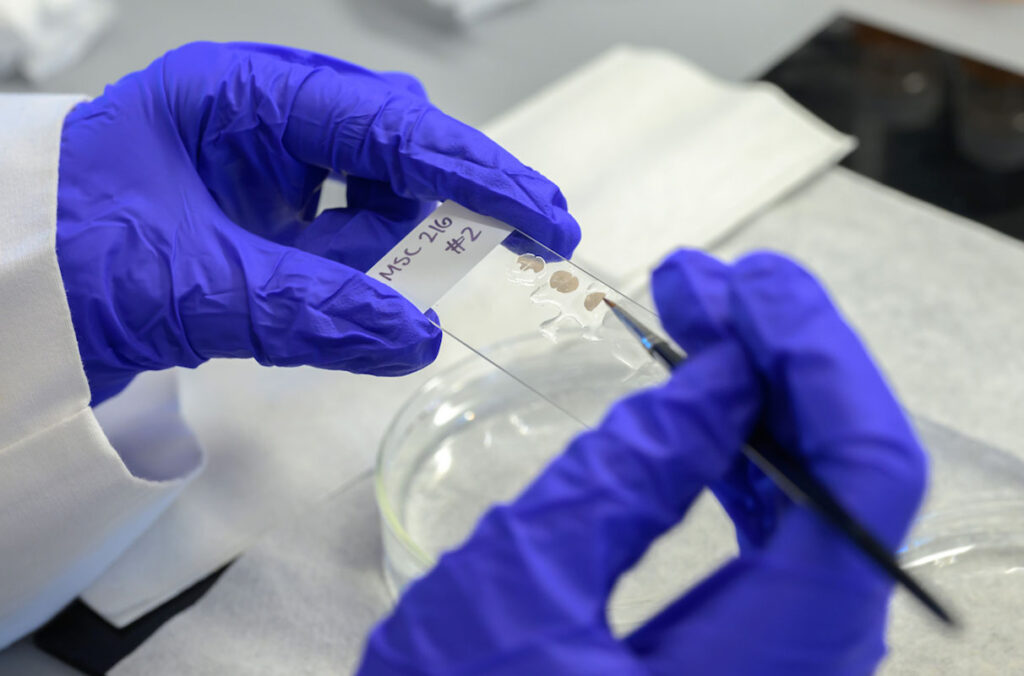
The research examines whether administration of cannabinoids, a synthetic version of the active ingredient in marijuana, in conjunction with antipain medications such as morphine, provides better pain relief than either drug alone. This research could be especially relevant for patients suffering with severe or chronic pain.
Morgan’s research was awarded $74,750 from the ARRA on May 15 and qualifies to receive matching funds for the second year of his research.
This is the first ARRA funding received by WSU. Morgan’s project is uniquely qualified to receive these funds because of its potential to stimulate the economy and create or retain jobs within the community. ARRA also stipulates that this particular project will make scientific progress in two years.
“This research is innovative in the field. Currently there are no other projects that are studying this chemical relationship using these parameters,” said Morgan.
Phase one is already underway, and Morgan projects starting phase two as early as January 2010.
To learn more about the NIH ARRA funds, visit: https://grants.nih.gov/recovery/
(This article was edited for accuracy on Aug. 13, 2010. An earlier version incorrectly referred to the substance being researched.)