Little League coaches do not have it easy when they have to work with their own kids. Some of the coach/parent behaviors might be perceived as favoritism by the other kids or their parents, even when they are not, and children might feel resentful or uncomfortable when they are related to the teams’ coach.
“Parent coaches are in a very difficult situation with their children because the research on children’s sport’s involvement shows that children enjoy sports the most when the parenting is left to the parents and the coaching is left to the coaches,” said Thomas Power, professor and chair of the Department of Human Development at Washington State University College of Agricultural, Human and Natural Resource Sciences.
The kids’ age is a factor that might make the parent-child relationship harder when dad or mom is also the coach. “As children enter adolescence many become increasingly uncomfortable when their parents are coaching,” Power said. “Probably the best solution for this problem would be for parents to avoid coaching their own children’s team, especially in the late elementary school years and later.”
But for some parents who are too involved in sports or with the team and quitting is not an option, there are other choices to make. “Serving as an assistant coach is an alternative way to help out that usually causes fewer problems for the child,” he said.
Sometimes, children won’t talk about their feelings about the new parental role. “If the parent is a coach and the child is avoiding conversations, one approach to dealing with this is to provide low threat opportunities for the child to talk,” Power said. “Rather than directly ask for information, which is often the greatest conversation stopper with adolescents and pre-adolescents, the parent can create opportunities for conversationmaybe make a non-threatening comment while watching a sports event on TV or on the way to a practice and if the child doesn’t ‘bite,’ try again later.
“Open communication is the key, but in tense situations like this, children often clam up making this difficult. Parent coaches must remember that they are parents first and should make sure that they provide their child with emotional support and encouragement. Excessive ‘technical support’ can be perceived as criticism.”
Power has published his research regarding parent-child relations in sports in scientific journals such as the Journal of Sport Behavior, the International Journal of Behavioral Development, the Journal of Applied Developmental Psychology and the Research Quarterly for Exercise and Sport. He can be reached at (509) 335-9540 or tompower@wsu.edu.
Next Story
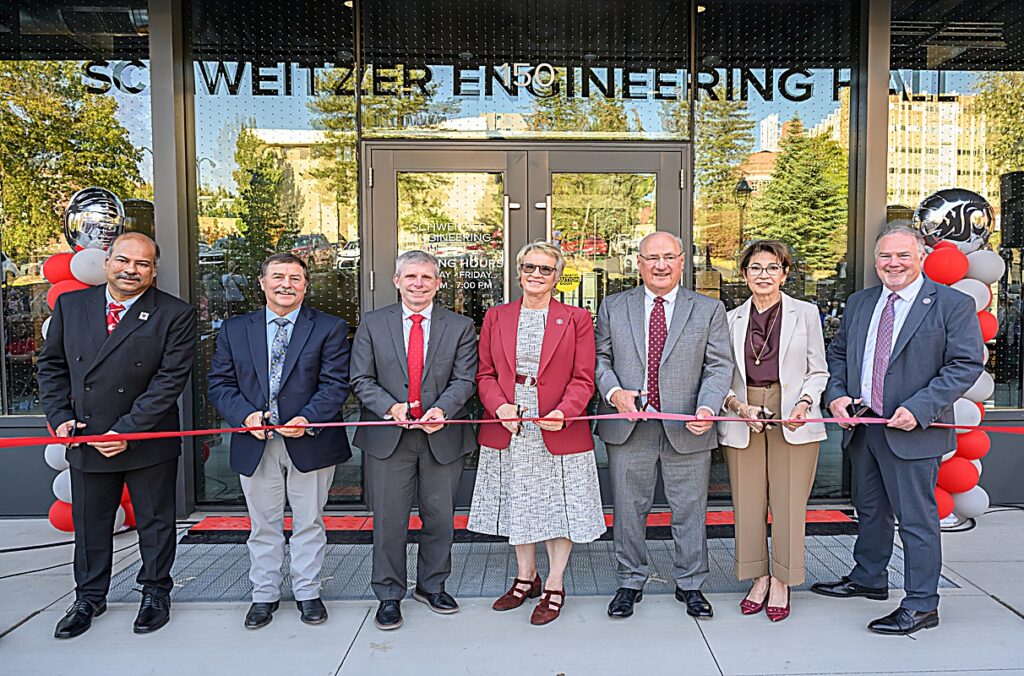
Schweitzer Engineering Hall dedicated during community celebration
The opening of the new hub for Voiland College of Engineering and Architecture is celebrated with a ceremonial ribbon-cutting and chorus of gratitude.
Recent News

WSU team develops potential treatment for endometriosis
Therapy uses nanoparticle to deliver drug directly to disease site, and researchers are hoping to move toward human trials.

Regents approve President Cantwell’s goals for FY27, rename Champions Center
Members of the WSU Board of Regents on Friday approved President Betsy Cantwell’s goals for fiscal year 2027 as part of a suite of actions at the governing body’s first meeting of the fall semester.

Ferdinand’s Lane closure planned for Sept. 21
Avista crews will close Ferdinand’s Lane between Stadium Way and Fairway Lane beginning at 9 a.m. Monday, Sept. 21, for utility work. The Pullman campus road closure is estimated to last two to three hours.

WSU celebrates Schweitzer Engineering Hall opening
The $80 million facility serves as the first major milestone in WSU’s broader engineering and design district modernization effort.

A new-look WSU Board of Regents
This month’s WSU Board of Regents meeting will be the first for three incoming members: Fé LopezGaetke, Mary Nam, and Student Regent Nicole Anthony.
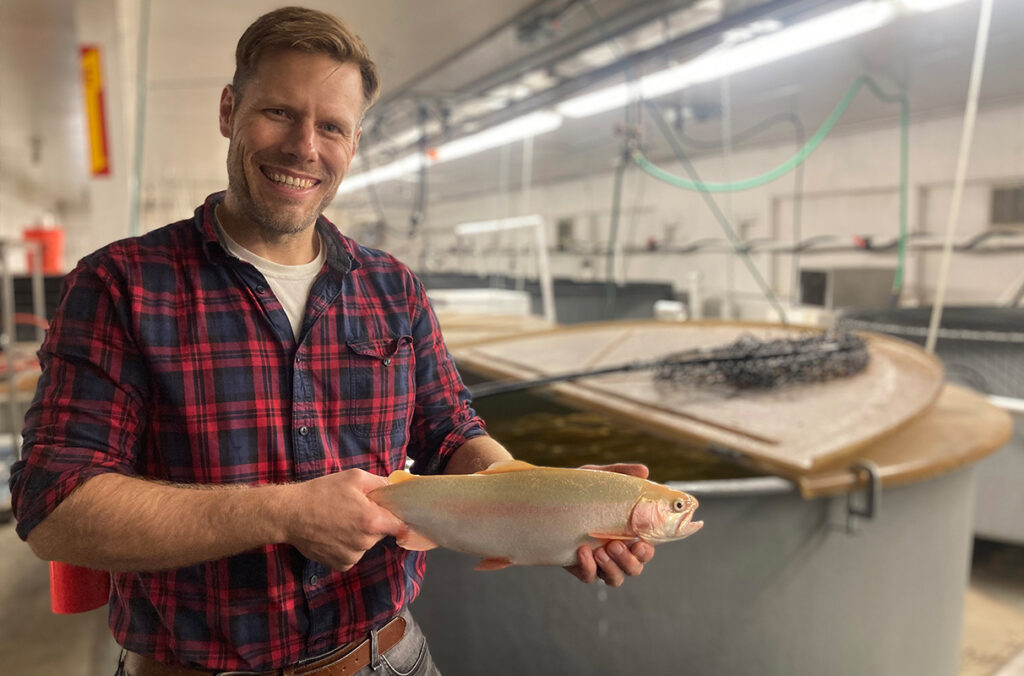
New WSU-led research aims to transform U.S. fish farming
A new, Washington State University-led approach to fish breeding could help U.S. aquaculture grow safely and profitably, with support from a Foundation for Food & Agriculture Research (FFAR) Growing Impact Award and matching funds from WSU and Troutlodge. The three institutions are providing a combined $1,566,716 to WSU researchers who are developing a practical way to produce healthy, sterile […]