The Faculty Senate recently held its annual election and, putting it briefly, the vice chair and chair are slated to change places on Aug. 15.
According to rules adopted in spring 2004, Ken Struckmeyer, an associate professor in Horticulture and Landscape Architecture, automatically will move from vice chair to chair of the senate.
Chairman Chuck Pezeshki, an associate professor in Mechanical and Materials Engineering, realizing he had a lot of things left that he’d like to help the senate accomplish, ran for vice chair — a position he’s never held — and was elected. So, in August 2006, Pezeshki will assume the reins as chairman. In the meantime, he will serve Struckmeyer in getting his goals accomplished and will help set the stage for his own second term.
Looking back at the past year, Pezeshki said he “feels great” about what the senate was able to accomplish. Major items included:
• beginning the design of a universitywide procedure for the proposal and review of new degree programs
• review and comparison of faculty salaries
• proposal of steps toward academic realignment
• review of issues surrounding temporary faculty.
“All the naysayers said the (Faculty Senate) body couldn’t move and be active,” Pezeshki said, “but we showed them that wasn’t true. There is so much going on right now, and we’re making it happen.”
One thing that has helped, he said, is “elevating” the work of faculty members serving on committees. “They are the ones who really are doing the work. They weren’t getting much recognition and we tried to change that.
“Ken Struckmeyer, Barry Swanson (executive secretary) and myself all get along really well and form a very effective team. We want to keep the Faculty Senate ball rolling, because you can’t have a world class university without the faculty out in front,” Pezeshki said.
“In the past, the Faculty Senate has taken somewhat of a passive role, and those days are gone. We are moving forward; we are not stopping. We’re working with the administration and we’re going to continue to be out in front on issues.”
During the past year, he said, the senate also has moved toward a statewide model of governance with leaders traveling to Vancouver, Tri-Cities and Spokane more frequently. “You just have to be willing to get on a plane and in the car and travel,” said Pezeshki, who at the moment was on a cell phone in his car returning from just such a trip.
Beginning Aug. 15, Struckmeyer said he will work half time as chair and will continue to work half time as a university ombudsman (see https://www.wsu.edu/~ombuds). “For the first time in 35 years at WSU I won’t be teaching in the classroom. Although I will still work with graduate students, including fifth-year senior projects in landscape architecture.”
Struckmeyer said he has been active in the Faculty Senate on and off for about 20 years, and he has served as a senator and chair of various committees during the past 15 years.
Like Pezeshki, Struckmeyer said the “power of the senate is in the committees, where most of the work is done … As chair, you work with the committee chairs and assist them when you can. The overwhelming and interesting challenge as chair is, how does one speak for a diverse faculty of 1,500 people at four campus locations.”
Struckmeyer said he and other senate leaders will work to complete the goals they began in 2004 and will begin work on several other key issues, including:
• creation and implementation of programs and procedures at WSU Vancouver, as it makes the transition to a four-year institution. Anticipated topics are general education requirements, prerequisite courses, adequate staffing and training, etc.
• continued review of the faculty hiring and tenure practices
• continued review of salary scale, particularly as it relates to tenure track and adjunct faculty
• the transition of WSU into a multicampus statewide system, including realignment, restructuring and continued extension and retraction of degrees to the urban campuses
• hosting the fall 2005 Coalition on Intercollegiate Athletics at WSU Pullman. This event will draw Faculty Senate representatives from many Bowl Championship Series (BCS) universities who are concerned about the role of intercollegiate athletics and its relationship to academics, including Penn State, University of Michigan, Ohio State University, University of Minnesota, Auburn, and many Pac-10 institutions.
That meeting will be focusing on the “overcommercialization and financing of athletics departments as it relates to the universities,” Struckmeyer said. “They are concerned about the salaries of coaches, expenditures on athletic facilities, the general conduct of athletes and how they are being treated, and the role of athletics in academic institutions.
“The reason we wanted to host this meeting,” he said, “is that in our view WSU is a national leader in dealing with these issues. We don’t have a huge deficit. Our students are graduating on time. The senate is regularly informed about the (academic) success of student athletes and our emphasis is on students.”
“It will be an interesting meeting.”
• evaluating and addressing the Faculty Senate’s role in providing child and infant care on campus. Currently, Struckmeyer said, the university’s child care facility only offers three slots per year to children of faculty and staff, which “has a negative effect on retention of young faculty.”
The senate, he said, will work with the central administration regarding the role the university has in financing, and will work with day care center administrators to provide more openings for the children of faculty.
“Some people have been waiting two to three years to get their children in the system,” Struckmeyer said.
Pezeshki agreed that the facility and services are “just too small.”
• dealing with diversity and equity issues and goals that arose this past year.
“We need to clearly define how faculty can provide leadership on these issues, as well as create intelligent partnerships with other campus organizations that focus on these areas,” said Pezeshki. “We will address curricular reform and campus climate with strategies that are centered around the guiding principles of the academy — tolerance, academic freedom, fairness, inclusion and curricular excellence.”
Other ongoing goals include:
• The role of interdisciplinary teaching and research.
• The review of undergraduate and graduate academic standards and curriculum.
• Improving the faculty annual review procedures.
• Designing a legislative strategy for the next state funding biennium.
One additional goal, Struckmeyer said with a chortle, is development of a faculty dress code. “President Rawlins on more than one occasion has introduced me as worst dressed member of the faculty. Some people think my ties and socks are appalling. So I’m interested in establishing a faculty dress code.
“I teach (landscape) design, but most people think I’m color blind and sometimes ask my wife if she has sees me before I go out the door in the morning. So, I want to chair this committee, so I won’t get subpoenaed.”
Next Story

WSU Global Campus student ambassador shines during #CougsGive Day
Aunjelique Andersen, a fully online student pursuing her degree in Media Innovation, ranked first on the #CougsGive Ambassador Leaderboard, inspiring 54 gifts through her outreach.
Recent News

WSU SURCA undergraduate researchers earn 65 awards
Seventy‑three students who participated in the Showcase for Undergraduate Research and Creative Activities 2026 were awarded prizes totaling $14,000.
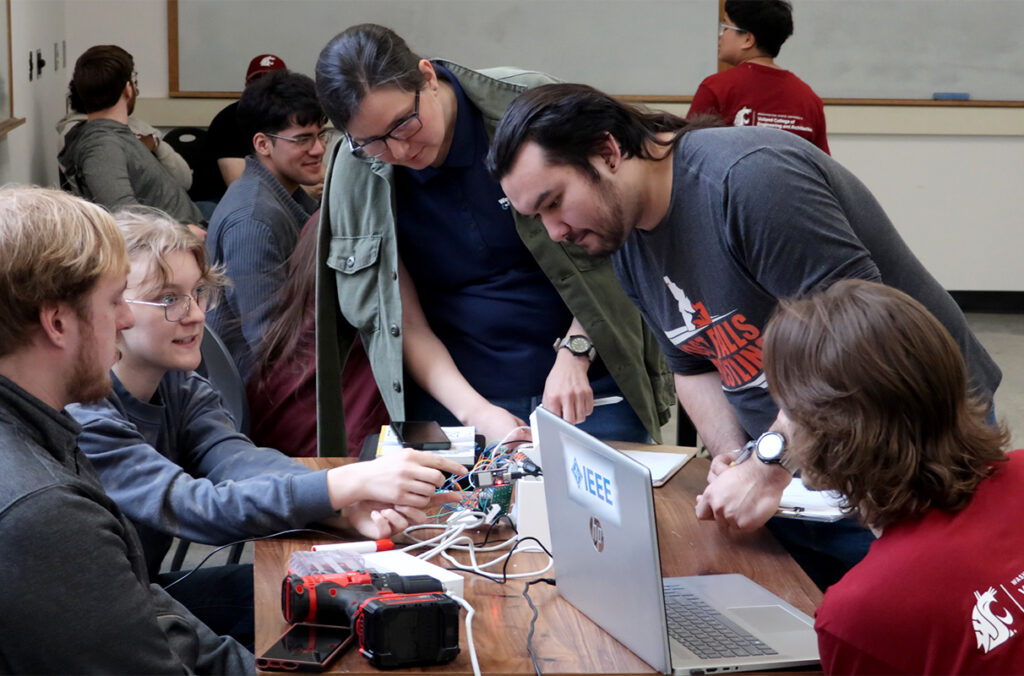
Inside WSU’s student-run hackathons
Hackathons have become a defining space for student innovation, with two taking center stage this year.
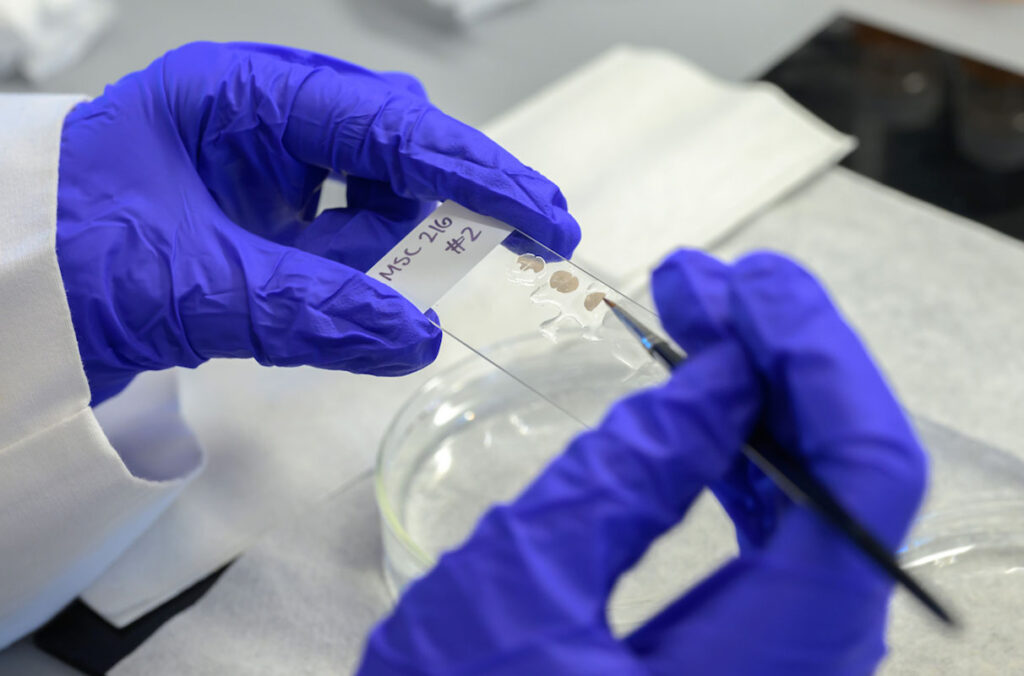
Undergrad researchers drive discovery in the College of Veterinary Medicine
Hands‑on research opportunities in the college are enabling students to contribute directly to major discoveries, including a recent Nature study.

New WSU raspberry breeder to continue career goal of helping farmers
Germán Sandoya-Miranda aims to develop improved varieties and work closely with growers to help Washington farmers boost yields and adapt to evolving challenges.
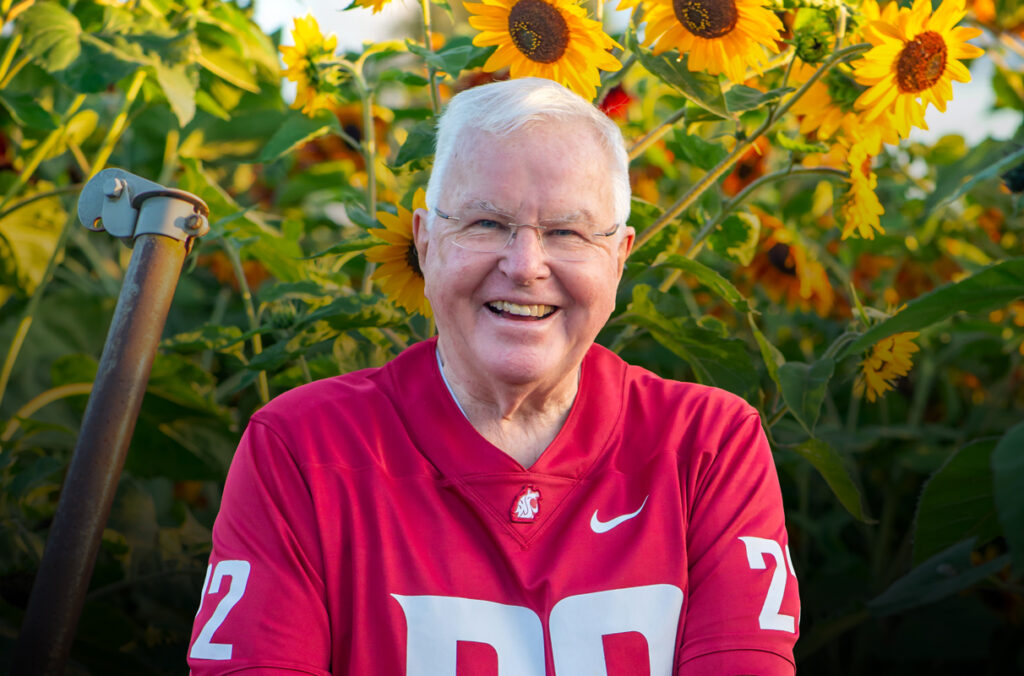
WSU Regent, longtime civic leader Sam Hunt dies following battle with leukemia
Hunt, a 1967 WSU graduate, devoted more than five decades to public service, education, and civic leadership across Washington.
WSU recognized for support of first-generation students
The university’s elevation to FirstGen Forward Network Champion reflects growing enrollment, improved retention, and expanded support programs helping first-generation students succeed.