PULLMAN — Didemnum sea squirts don’t look scary. But the yellow blobs that are showing up on rocks and lobster traps in Puget Sound and the Hood Canal have biologists plenty worried.
Native to Europe, the colonial creatures lack natural predators in North America. Unnoticed and unopposed, they can spread unchecked, eventually smothering shellfish beds and emitting toxins that harm other residents of the intertidal zone.
And they’re not alone. Non-native species such as apple maggots, knapweed and cheatgrass threaten orchards, rangelands and forests across Washington.
Nationwide, invasive species do an estimated $137 billion of environmental and economic damage each year.
Richard Mack of Washington State University’s School of Biological Sciences is part of a panel that will report on the issue during a press conference at 9:30 a.m. March 3 at the National Press Club in Washington, D.C. The panel, convened by the Ecological Society of America, will announce a set of recommendations to combat biological invaders.
“We view biological invasions as serious threats,” said Mack. “Threats to biodiversity, the national economy and even, at times, human health.”
He said that measures to detect, prevent and control invasive species will require coordination across all levels of government within the US and globally. With extensive travel and trade among nations, he said, “these are intrinsically international issues.”
Following the press conference, Mack and his colleagues will talk with congressional staffers to urge prompt action on their proposals.
Mack, a terrestrial ecologist, studies biological invasions and their consequences. He led another ESA group that in 2000 produced a report laying the scientific groundwork for the policy recommendations in the new paper.
Related links:
* ww.esa.org/science/Issues/FileEnglish/issue5.pdf – “Biotic Invasions:
Causes, Epidemiology, Global Consequences and Control” – 2000 report by the ESA dealing with the scientific aspects of invasive species.
* ww.invasivespeciesinfo.gov/unitedstates/wa.shtml – USDA site with information on invasive species problems in Washington state.
* www.invasivespeciescoalition.org – Web site of Washington scientists and conservation groups concerned about invasive species.
* ww.wsu.edu/NIS/Universe/TenaciousStory.html – “Reluctant Admiration for a Tenacious Invader,” story about Richard Mack and cheatgrass.
Next Story

Schweitzer Engineering Hall dedicated during community celebration
The opening of the new hub for Voiland College of Engineering and Architecture is celebrated with a ceremonial ribbon-cutting and chorus of gratitude.
Recent News

WSU team develops potential treatment for endometriosis
Therapy uses nanoparticle to deliver drug directly to disease site, and researchers are hoping to move toward human trials.

Regents approve President Cantwell’s goals for FY27, rename Champions Center
Members of the WSU Board of Regents on Friday approved President Betsy Cantwell’s goals for fiscal year 2027 as part of a suite of actions at the governing body’s first meeting of the fall semester.

Ferdinand’s Lane closure planned for Sept. 21
Avista crews will close Ferdinand’s Lane between Stadium Way and Fairway Lane beginning at 9 a.m. Monday, Sept. 21, for utility work. The Pullman campus road closure is estimated to last two to three hours.
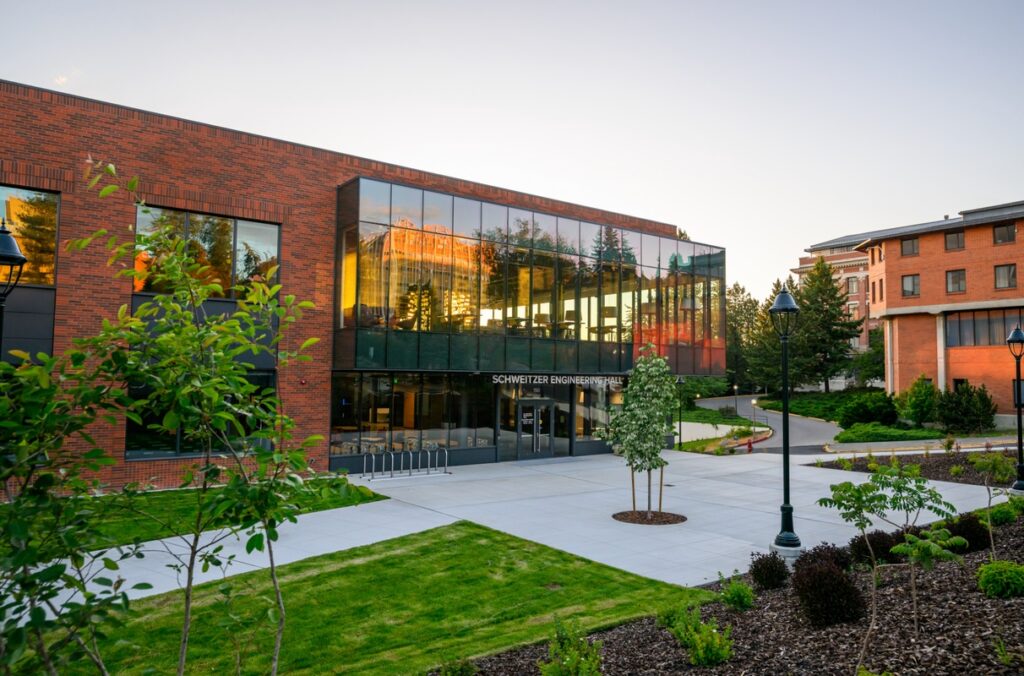
WSU celebrates Schweitzer Engineering Hall opening
The $80 million facility serves as the first major milestone in WSU’s broader engineering and design district modernization effort.

A new-look WSU Board of Regents
This month’s WSU Board of Regents meeting will be the first for three incoming members: Fé LopezGaetke, Mary Nam, and Student Regent Nicole Anthony.
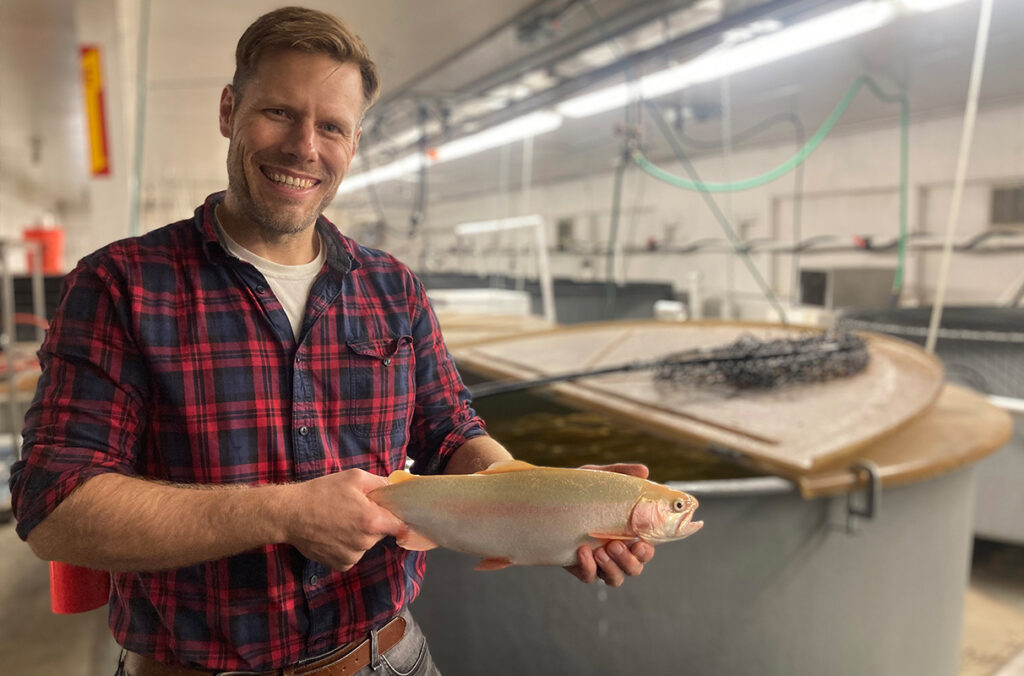
New WSU-led research aims to transform U.S. fish farming
A new, Washington State University-led approach to fish breeding could help U.S. aquaculture grow safely and profitably, with support from a Foundation for Food & Agriculture Research (FFAR) Growing Impact Award and matching funds from WSU and Troutlodge. The three institutions are providing a combined $1,566,716 to WSU researchers who are developing a practical way to produce healthy, sterile […]