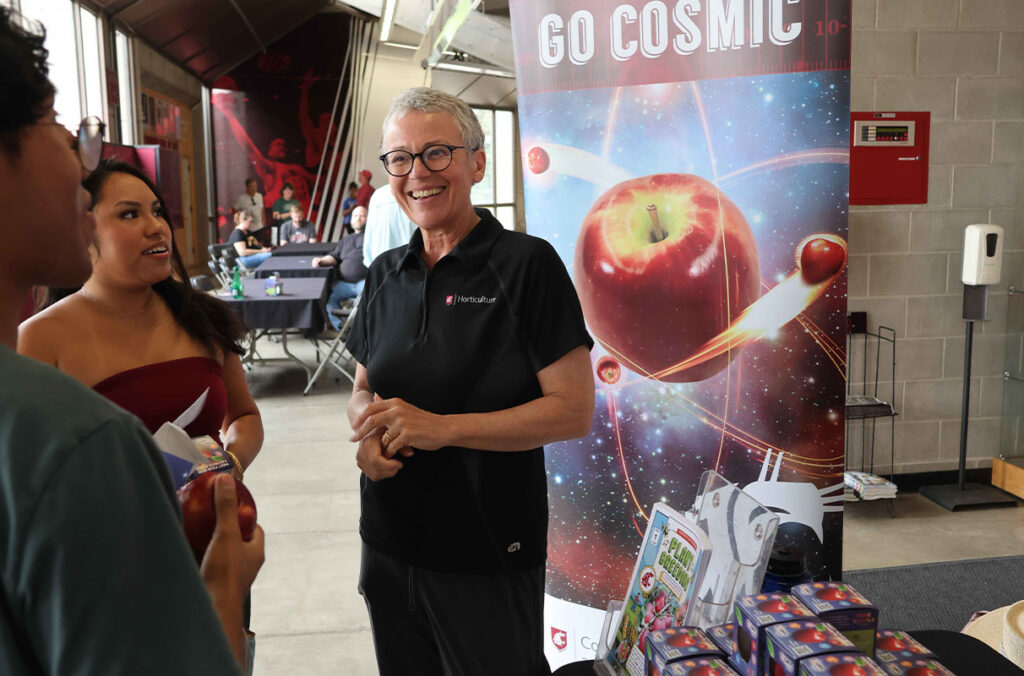
VANCOUVER, Wash. — Washington State University faculty member Sue Armitage has been named the new director of the Center for Columbia River History, a regional partnership supported by WSU Vancouver, the Washington State Historical Society and Portland State University.
Armitage succeeds Bill Lang of PSU as director of the center, effective Sept. 8. “We are delighted to welcome this nationally known scholar to the center,” said Candice Goucher, director of the
As its new director, Armitage plans to coordinate and expand the center’s scope and range of activities to make heritage resources available to the residents of the
“This is a rare opportunity to bridge the gap between scholars and the public. I’m eager to get to work,” she said.
Armitage is the Claudius O. and Mary W. Johnson Distinguished Professor of History at WSU, where she has taught for 25 years. She is the author of numerous books and articles on western women’s history. Last year Armitage was a resident fellow at
The Center for Columbia River History is located on the Vancouver National Reserve and can be contacted by phoning (360) 258-3289 and online at www.ccrh.org. CCRH is a public history partnership whose mission is to promote the study of the history of the
WSU Vancouver offers 15 bachelor’s degrees and eight master’s degrees in 35 fields of study. The campus is located at