WSU protects Washington’s forests, one family at a time
More than 7,500 families have learned how to safeguard and enhance their private forest land over the last 30-plus years thanks to Washington State University.
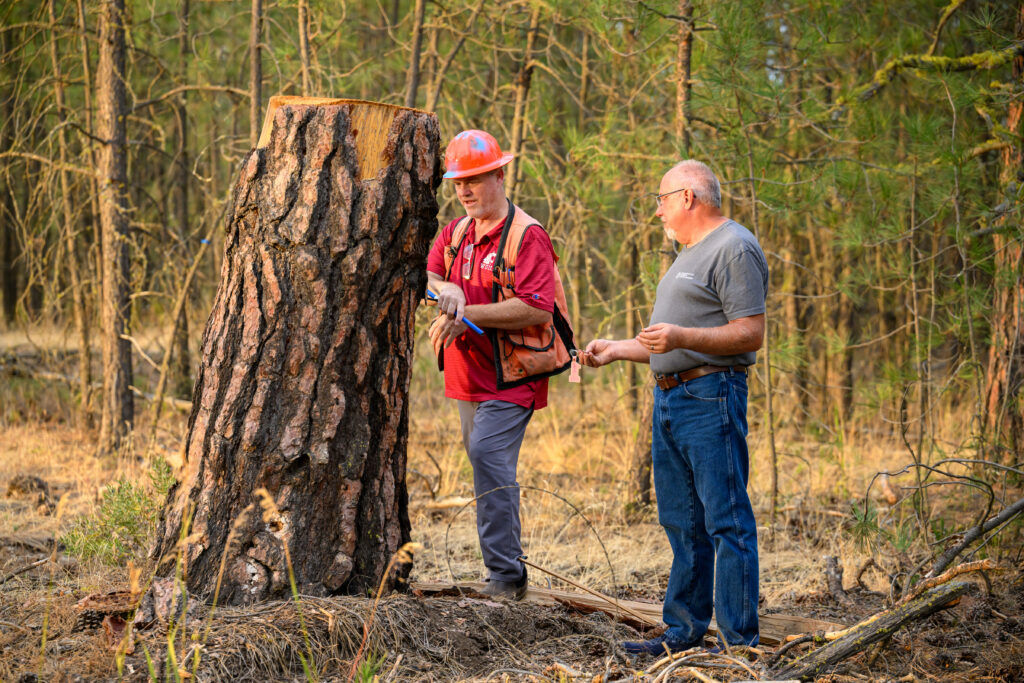
Bill Shea’s family settled their property near Cheney, Washington, more than a century ago. Now Shea wants to make sure to protect his great-grandfather’s land for his descendants.
Last fall Shea enrolled in a class offered by Washington State University where he learned how to create a custom forest management plan to help reduce the risk of wildfire and benefit the abundant wildlife that lives on his property. In doing so, he joined more than 7,500 families who’ve learned how to safeguard and enhance their private forest land over the last 30-plus years, courtesy of WSU.

7,500
families helped
The forest management planning class is something we’ve received national awards for …
“The forest management planning class is something we’ve received national awards for,” said Andrew Perleberg, a WSU professor and Extension forester. “What we’ve found is it’s not the plan itself that’s the biggest help to landowners, it’s the process of preparing it, the time spent learning and out on the ground, seeing the land through a professional’s eyes.”
500,000
acres managed

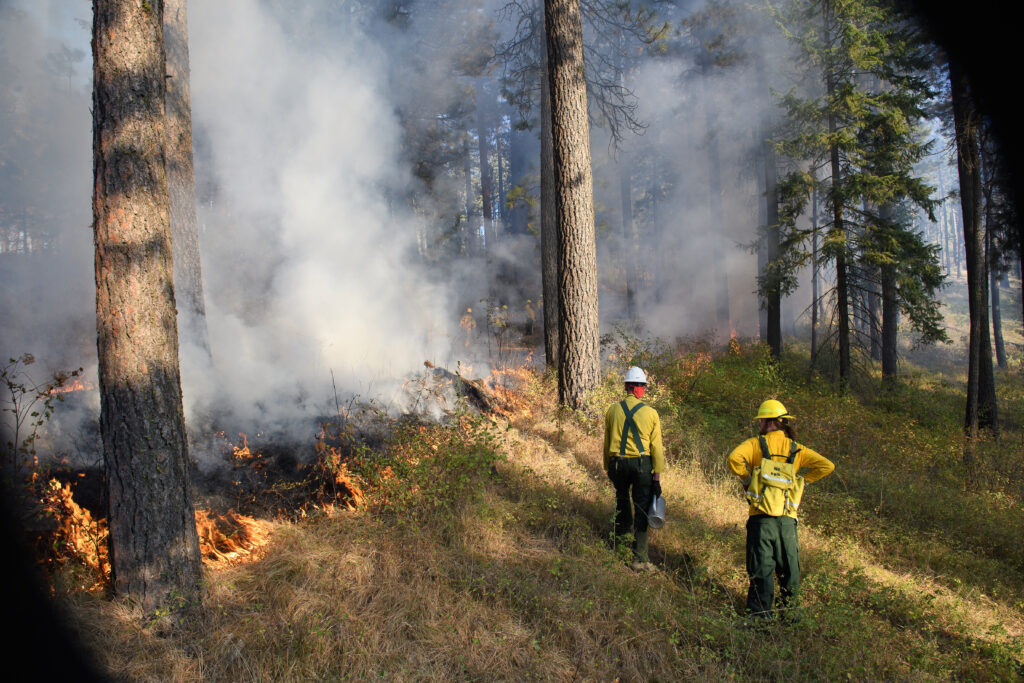
Shea wanted to thin the overcrowded, forested parts of his family’s 1,150 acres and take out the Ponderosa pine trees affected by bark beetle infestation. “My fear was, always, that we would have a fire and it would be devastating. We really needed to do something to manage our forest, otherwise when our time came we would lose the whole thing,” Shea said. He added, “at least now it’s defensible.”

Landowners’ goals can include
- Climate resilience
- Improving wildlife habitat
- Removing invasive plants
- Producing higher quality timber
- Boosting property aesthetics
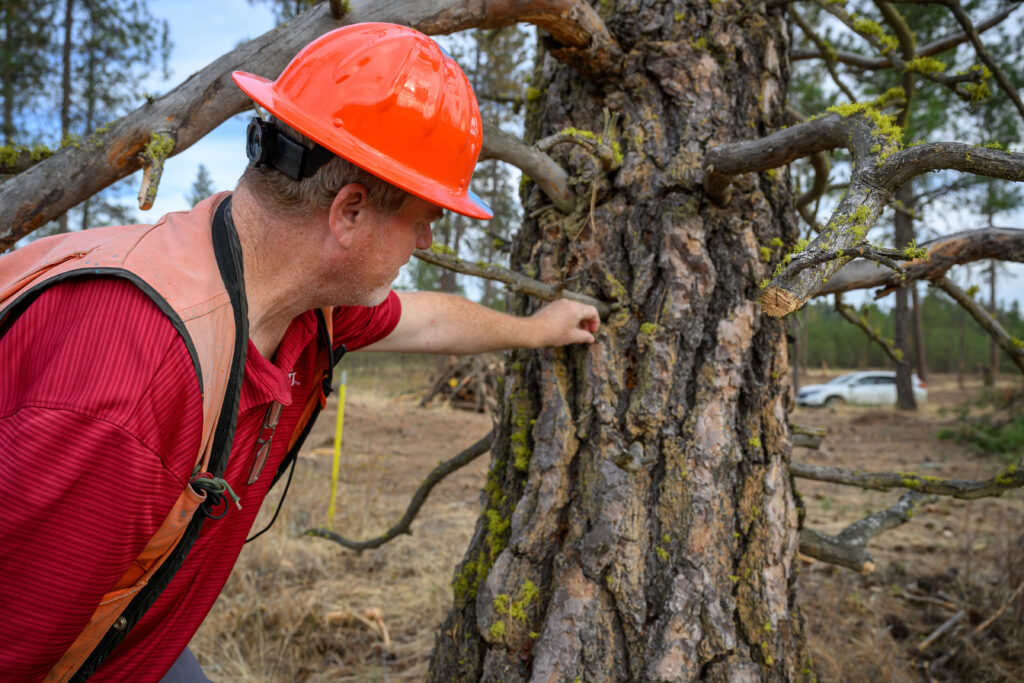
Landowners’ goals can include climate resilience, improving wildlife habitat, removing invasive plants, producing higher quality timber and boosting the aesthetics of their property.
In many cases, the answer is thinning and clearing, and that’s good because it “makes it easy, it gives people actionable advice,” said Kevin Zobrist, a WSU professor and Extension forester.
97%
still using their plans 8 years later

Zobrist conducted follow-up surveys of landowners in western Washington who participated in the Forest Stewardship Coached Planning course from WSU Extension, and found that 97% of participants who had developed a plan were still following it eight years later. Nearly 99% said they were still benefitting from taking the course.
99%
still benefitting
It’s not just the landowners who are helped, either. There’s public benefit in creating healthier ecosystems and reducing wildfire risk. Over the decades, the people who’ve taken part in the WSU forest management plan classes represent about a half-million acres of land in the state. The Washington State Department of Natural Resources puts the public benefit of actively managed forests at about $900 an acre, making the impact of WSU’s efforts more than $40 billion.
$40+ BILLION
public benefit

“If that forestland was to burn, the cost to put out the fire is substantial,” Perleberg noted. “But the landowner reduced that risk and they did it themselves because of the $100 class they took through WSU. This stuff adds up.”
Visit the Extension Forestry website for more information on the forest management course and other WSU Extension resources or visit the Office of Research website to see WSU research on wildfire challenges.
Explore WSU News to learn more about how WSU’s impact goes beyond the numbers.