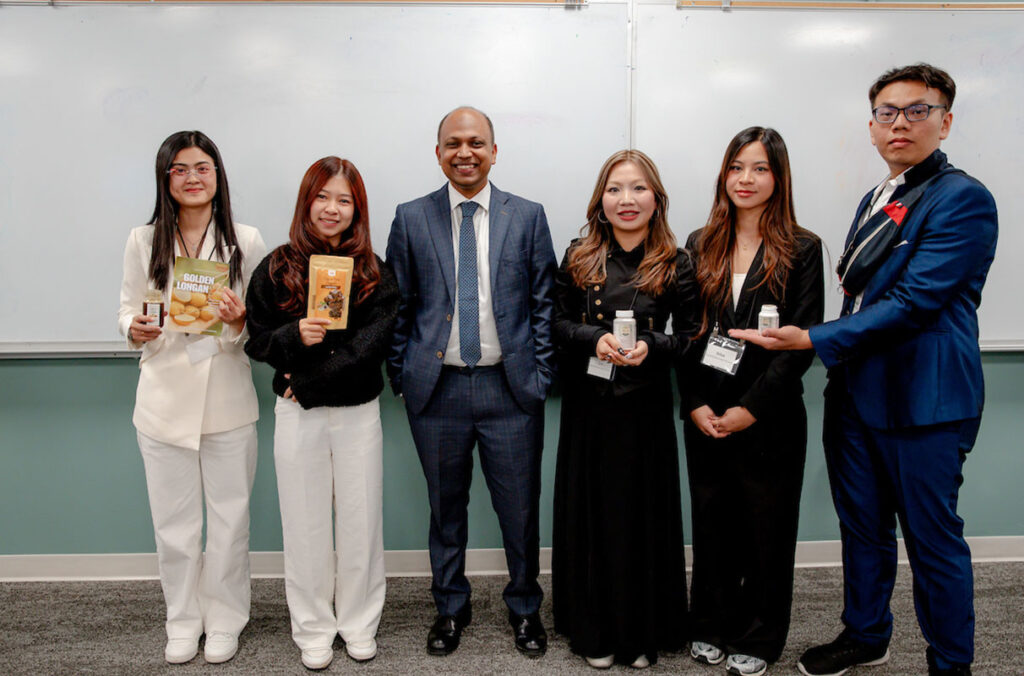
Last spring, students from CamEd Business School in Phnom Penh, Cambodia, traveled to Washington State University’s Carson College of Business for the second consecutive year to present ventures developed through the school’s entrepreneurship program. Student teams shared their business concepts with members of the Carson College’s International Business Club, returning to Pullman as part of a partnership that is quickly becoming an annual tradition between the two institutions.
The visit brought four students and Assistant Professor Monirul Islam, who directs CamEd’s Entrepreneurship Centre, to campus for presentations, guest lectures, and discussions with Carson faculty and students. Together, the activities highlighted how entrepreneurship education can connect students across cultures while encouraging them to develop business ideas that address concrete needs within their communities.
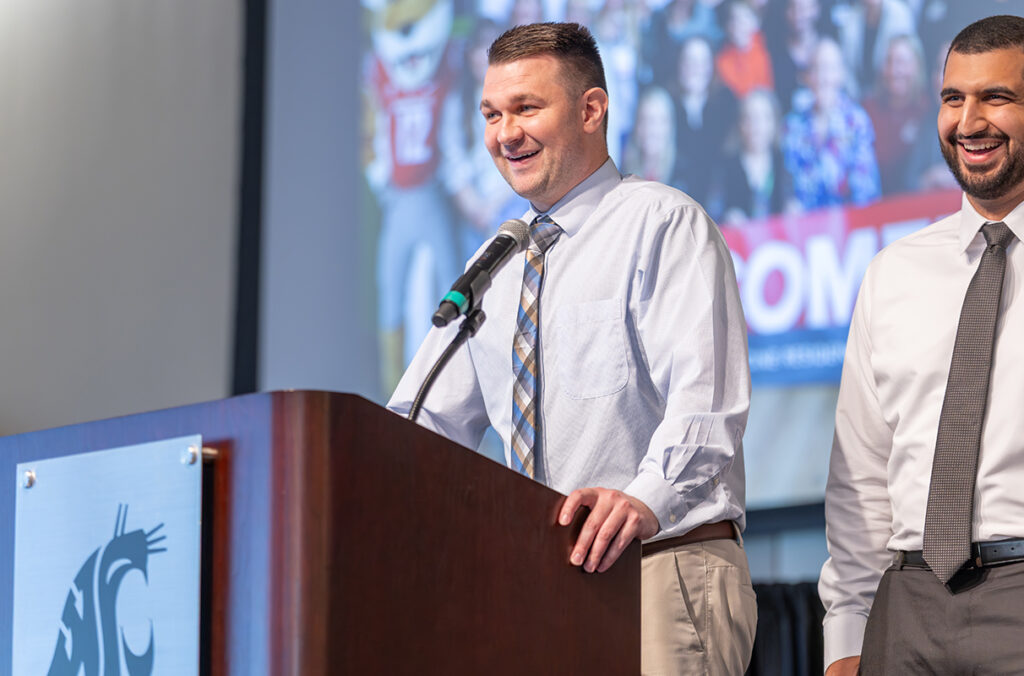
“The International Business Institute mobilizes faculty, staff, and students to engage in scholarly activities that transcend borders,” said Jeff Joireman, director of the Carson College’s International Business Institute. “We welcome international scholars from partnering institutions like CamEd, who offer invaluable entrepreneurial insights to Carson College students and faculty while gaining new perspectives themselves.”
An annual exchange
The partnership began as a conversation between Islam and the Carson College’s International Business Institute, growing into a visit that has served as the culminating experience for CamEd’s Entrepreneurship Challenge competition. The top two teams earned the opportunity to present their ideas before an international audience at WSU.
“The whole point is to give CamEd students experience on an international stage,” Islam said. “They learn about another culture, another market, and what it takes to expand a business beyond Cambodia.”
During this year’s visit, Islam delivered guest lectures in Carson College marketing and international business courses, introducing students to business practices across Southeast Asia while answering questions about the region’s rapidly growing markets.
“Carson students were incredibly curious about Southeast Asia,” Islam said. “I think I answered more than 30 questions in a single class.”
Ideas rooted in local issues
While the CamEd teams presented an array of different products, they shared a common approach to entrepreneurship.
“We always start with the problem — not with making money,” Islam said. “If you want to build something sustainable, start by solving a real problem. That’s what gives a business its competitive advantage.”
One team transformed discarded eggshells into food-grade calcium powder after identifying eggshell waste as an underused resource. The students spent months refining the concept, conducting laboratory testing, and consulting with medical professionals to ensure the product was safe before presenting it publicly.
A second team looked to Cambodia’s longan fruit industry for inspiration. Drawing on firsthand experience with the fruit’s short harvest season and propensity to spoil quickly, the students developed sweeteners made from longan that could create additional income for growers.
“I wanted to find a way to create more value from something my family was already growing,” said CamEd student Hak Sokheang. “The experience showed me that even as students, we can create ideas that help solve problems in our communities.”
For Islam, those projects demonstrate the mindset he hopes students will carry into their careers. Rather than searching for the next trend, he encourages aspiring entrepreneurs to pay close attention to the challenges surrounding them and build solutions with lasting value.
Looking beyond borders
Presenting those ideas in Pullman also gave students the opportunity to explain their work to a new audience and experience another business culture firsthand. Outside the classroom, the group met with members of the International Business Club and toured campus while exploring opportunities to continue the partnership.
“Everyone was very welcoming,” said CamEd student Kimsan Kanika. “Meeting Carson students and sharing our ideas with them was one of my favorite parts of the trip.”
Islam hopes the collaboration will continue in the coming years. Future plans include bringing additional CamEd teams to Pullman, exploring opportunities for Carson students to visit Cambodia, and eventually having CamEd students compete in the WSU Business Plan Competition.
For Joireman, the exchange reflects the value of bringing together students with different perspectives but shared ambitions.
“Entrepreneurship doesn’t happen in isolation,” Joireman said. “When students present their ideas to peers from another part of the world, they gain new perspectives on their own work while discovering how much they share as aspiring entrepreneurs. Those kinds of connections strengthen everyone involved, and we’re excited to see this partnership continue to grow.”