The perfect blend
WSU has worked with growers and producers for decades to nurture a Washington wine industry that’s an economic powerhouse.
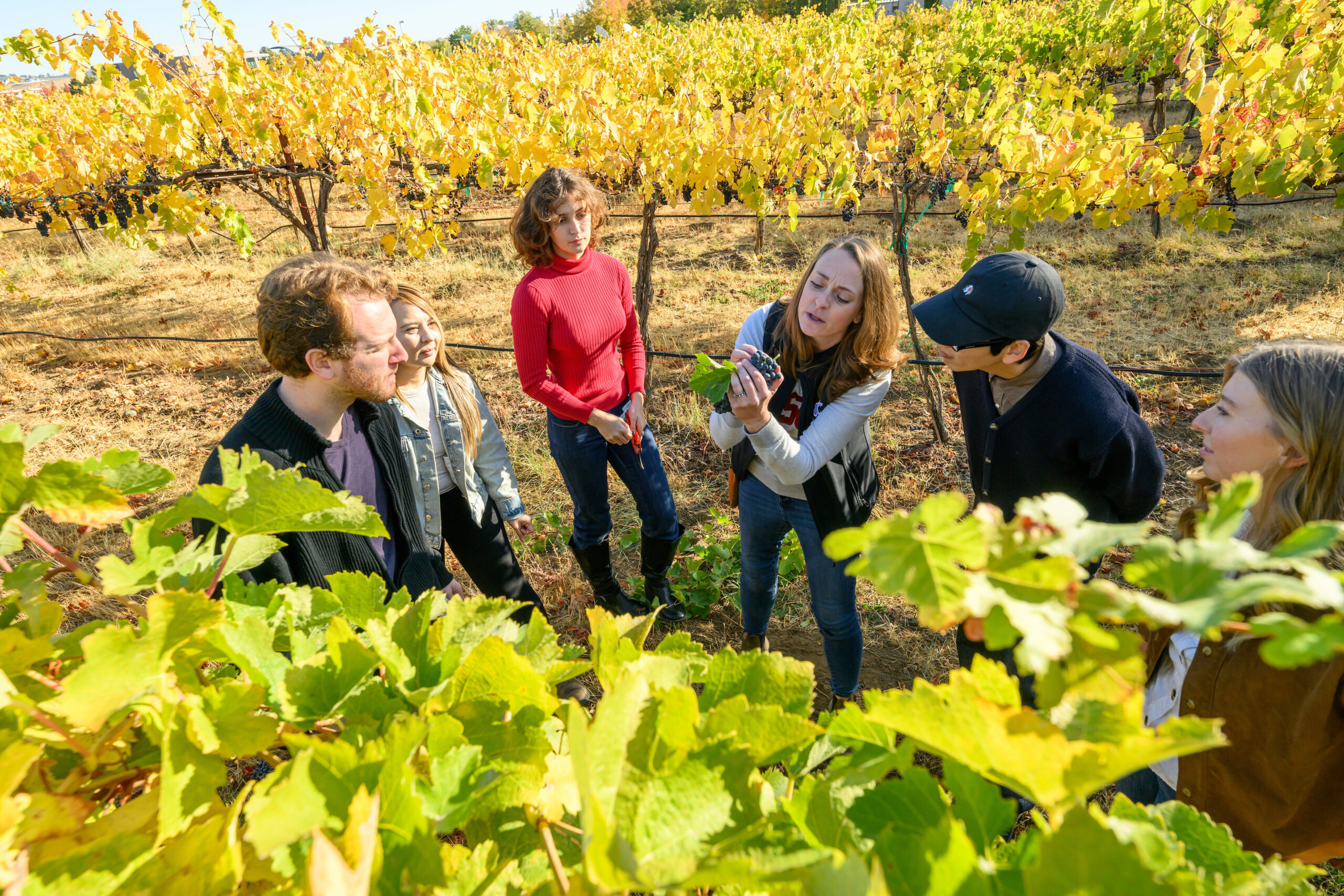
Like a Washington Merlot and Cougar Gold cheese, Washington state’s wine industry and Washington State University are the perfect pairing.
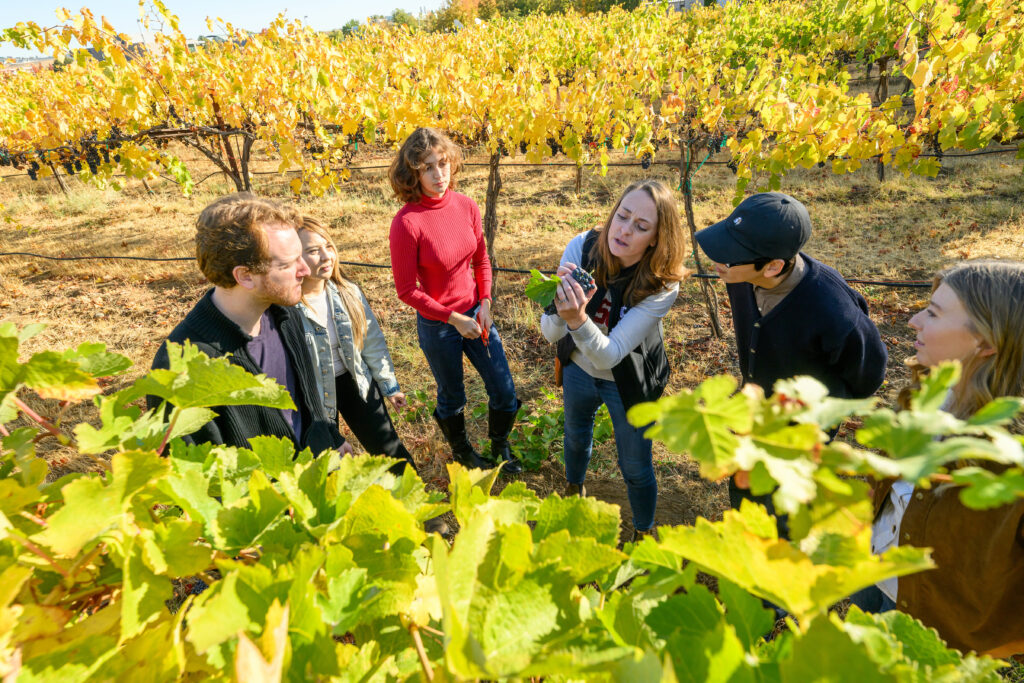
As the state’s wine industry took flight, WSU, an agriculture powerhouse, responded with new research and education programs. WSU has cultivated grape varieties suited to the state’s climate and geography, and offered a range of classes from certificates to degrees to nurture a home-grown wine industry workforce.
Learn more about how WSU and the Washington wine industry work hand in hand to achieve the perfect blend.
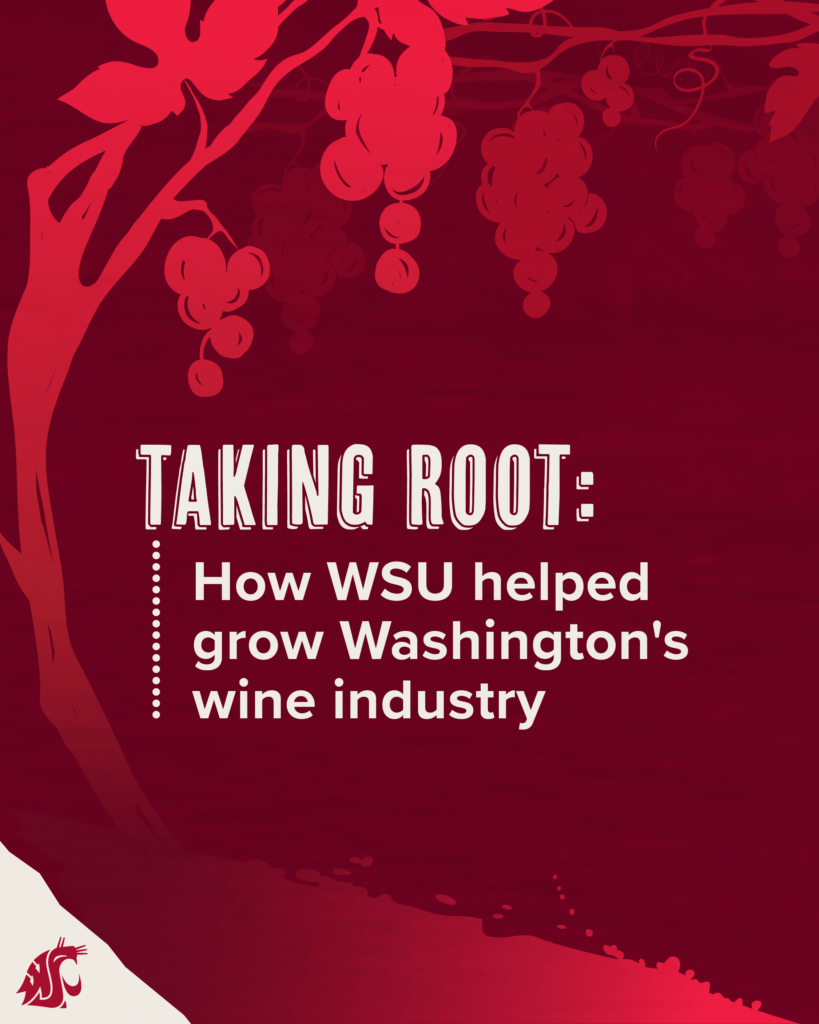

Infographic full text
Taking Root: How WSU helped grow Washington’s wine industry.
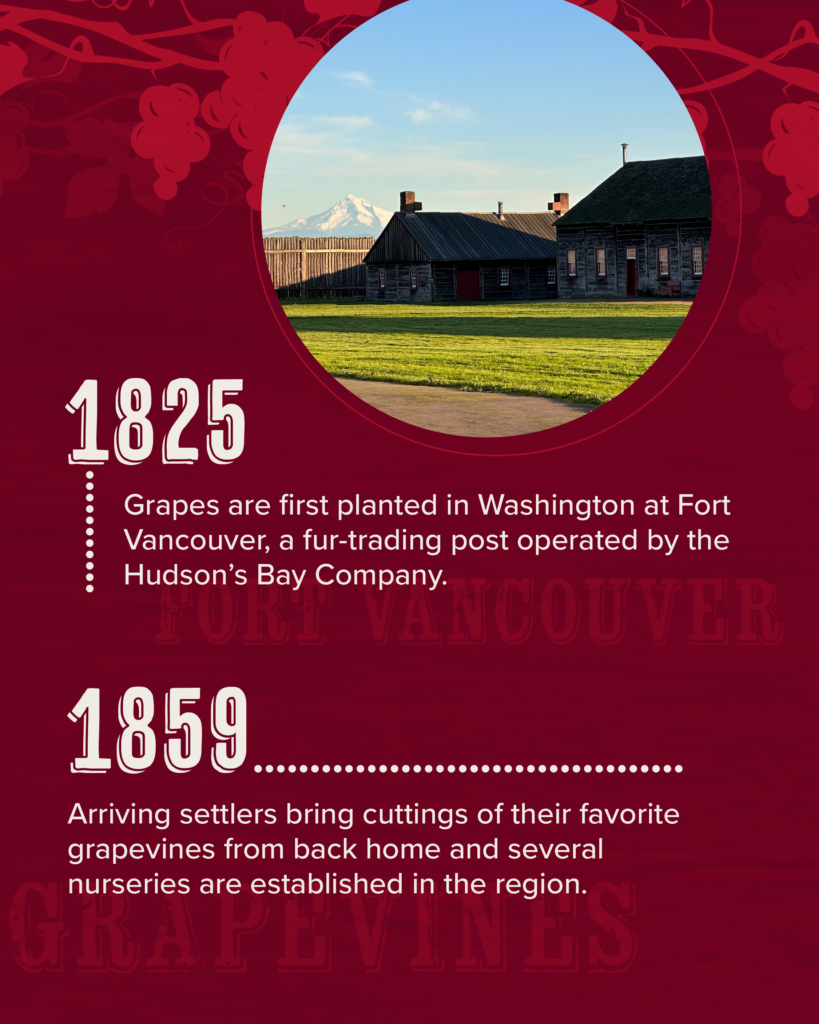
- 1825: Grapes are first planted in Washington at Fort Vancouver, a fur-trading post operated by the Hudson’s Bay Company.
- 1859: Arriving settlers bring cuttings of their favorite grapevines from back home and several nurseries are established in the region.
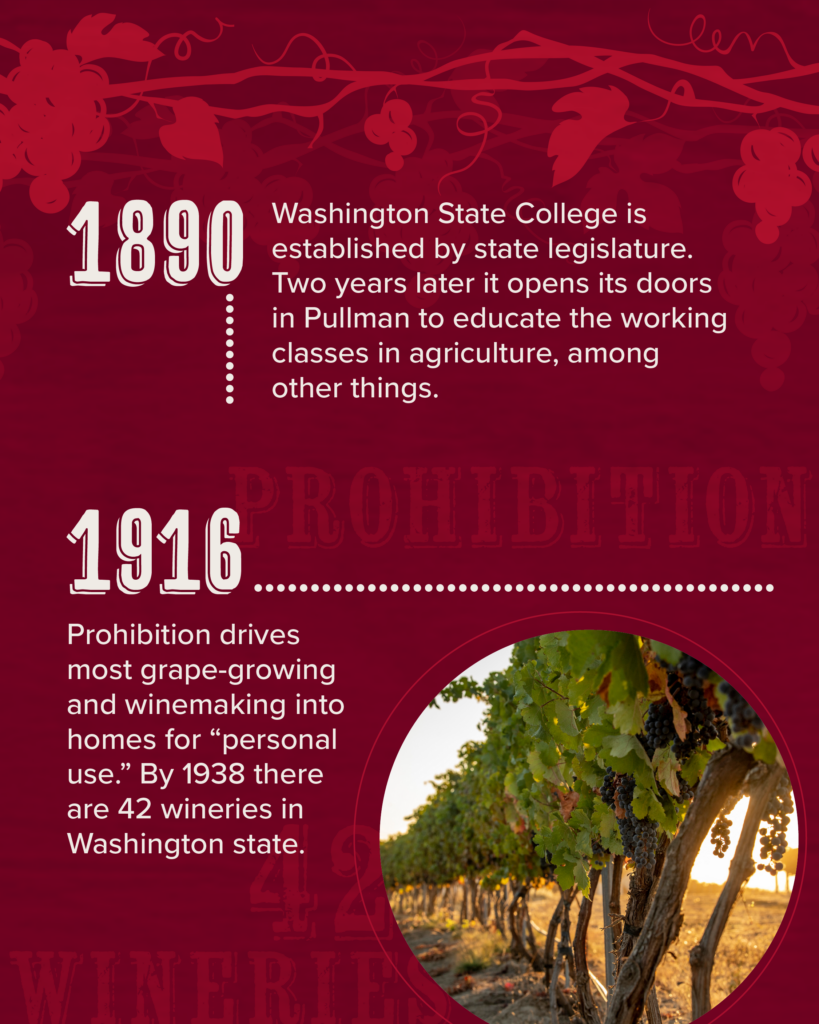
- 1890: Washington State College is established by state legislature. Two years later it opens its doors in Pullman to educate the working classes in agriculture, among other things.
- 1916: Prohibition drives most grape-growing and winemaking into homes for “personal use.” By 1938 there are 42 wineries in Washington state.
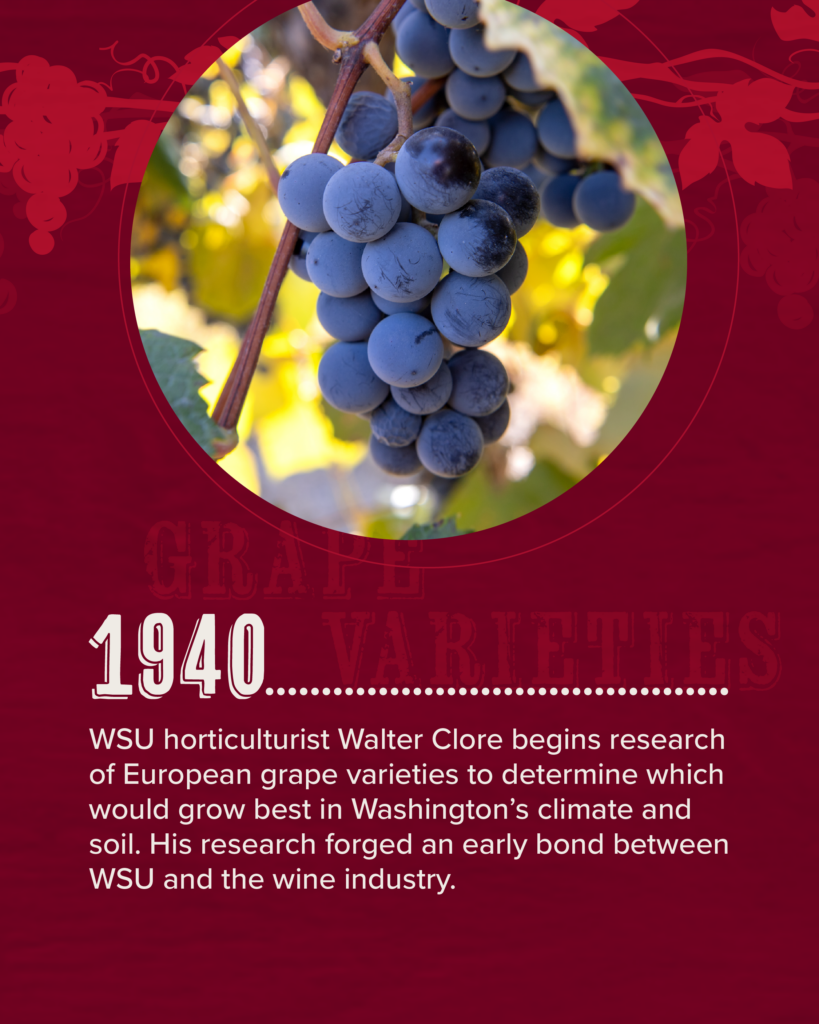
- 1940: WSU horticulturalist Walter Clore begins research of European grape varieties to determine which would grow best in Washington’s climate and soil. His research forged an early bond between WSU and the wine industry.
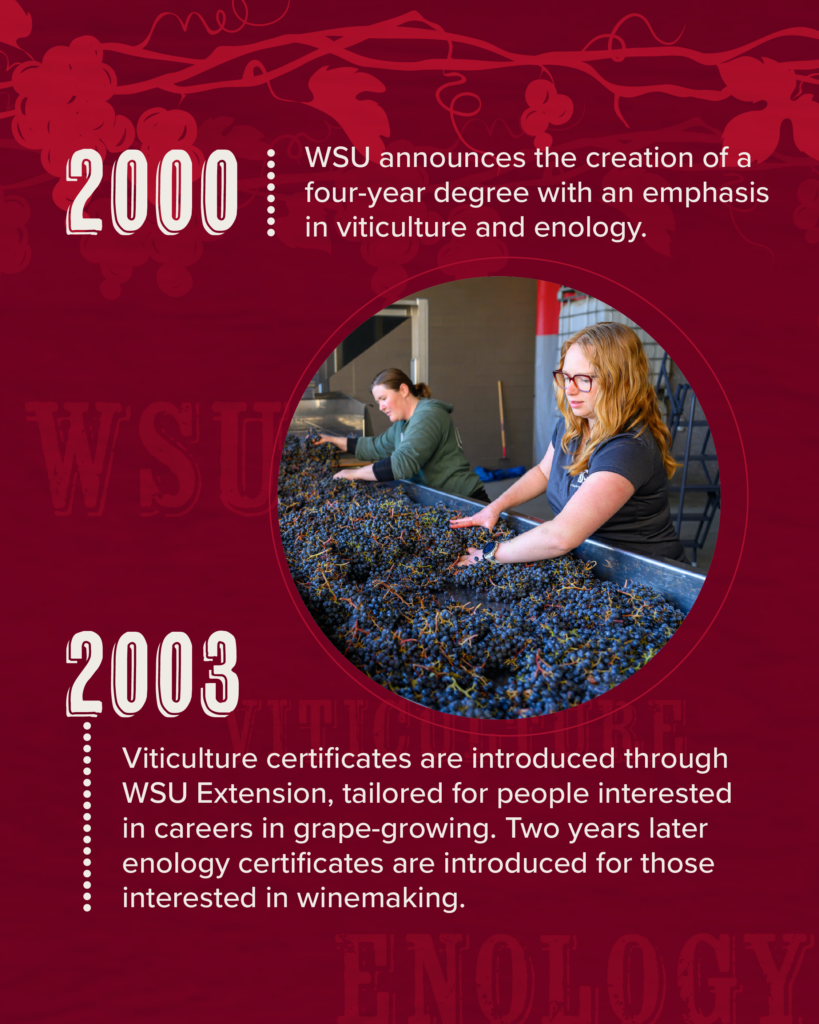
- 2000: WSU announces the creation of a four-year degree with emphasis in viticulture and enology.
- 2003: Viticulture certificates are introduced through WSU Extension, tailored for people interested in careers in grape-growing. Two years later enology certificates are introduced for those interested in winemaking.
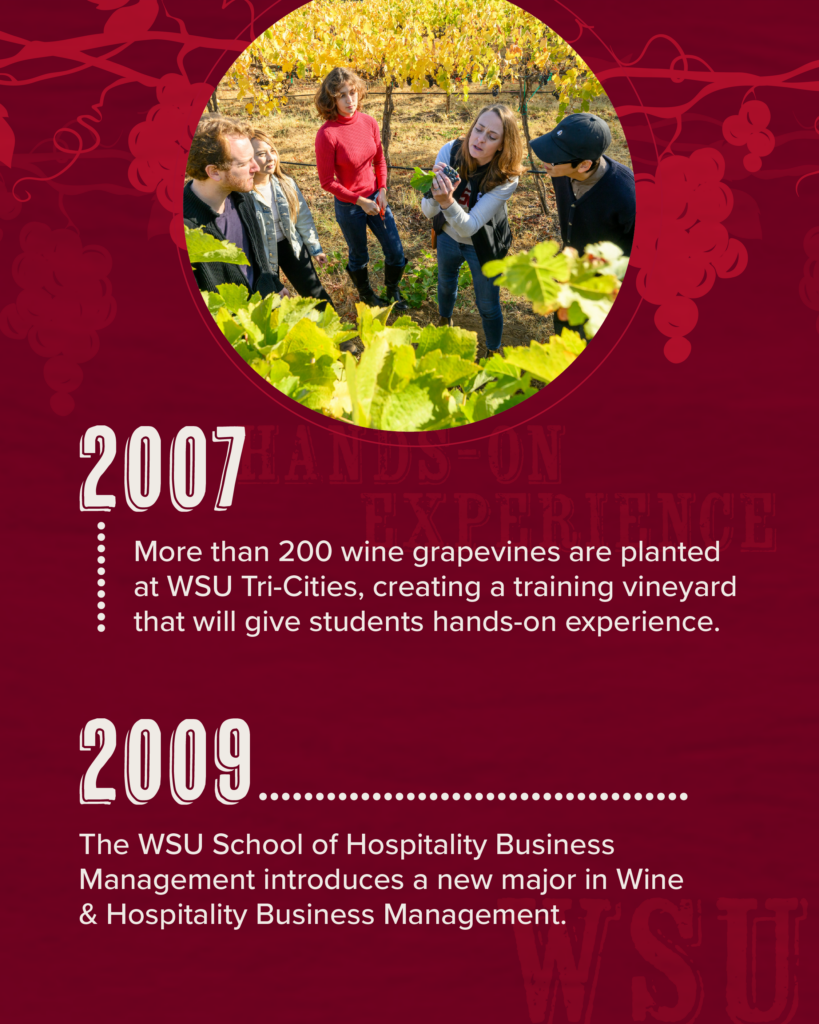
- 2007: More than 200 wine grapevines are planted at WSU Tri-Cities, creating a training vineyard that will give students hands-on experience.
- 2009: The WSU School of Hospitality Business Management introduces a new major in Wine & Hospitality Business Management.
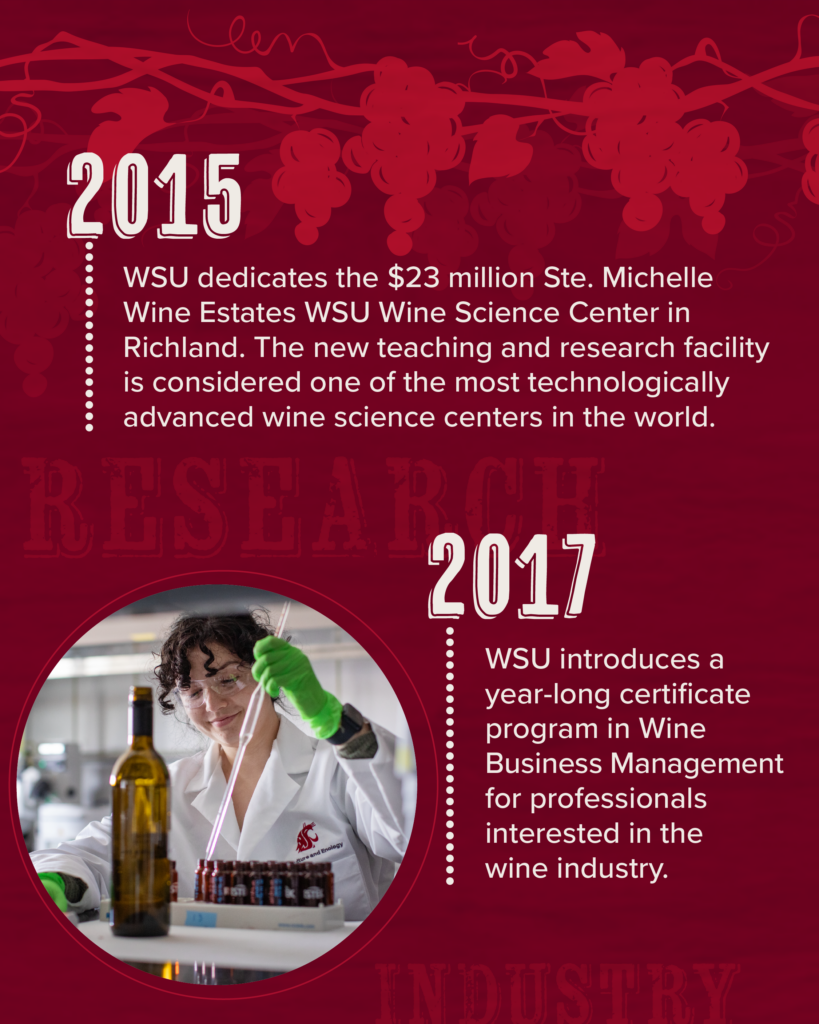
- 2015: WSU dedicates the $23 million Ste. Michelle Wine Estates WSU Wine Science Center in Richland. The new teaching and research facility is considered on of the most technologically advanced wine science centers in the world.
- 2017: WSU introduces a year-long certificate program in Wine Business Management for professionals interested in the wine industry.
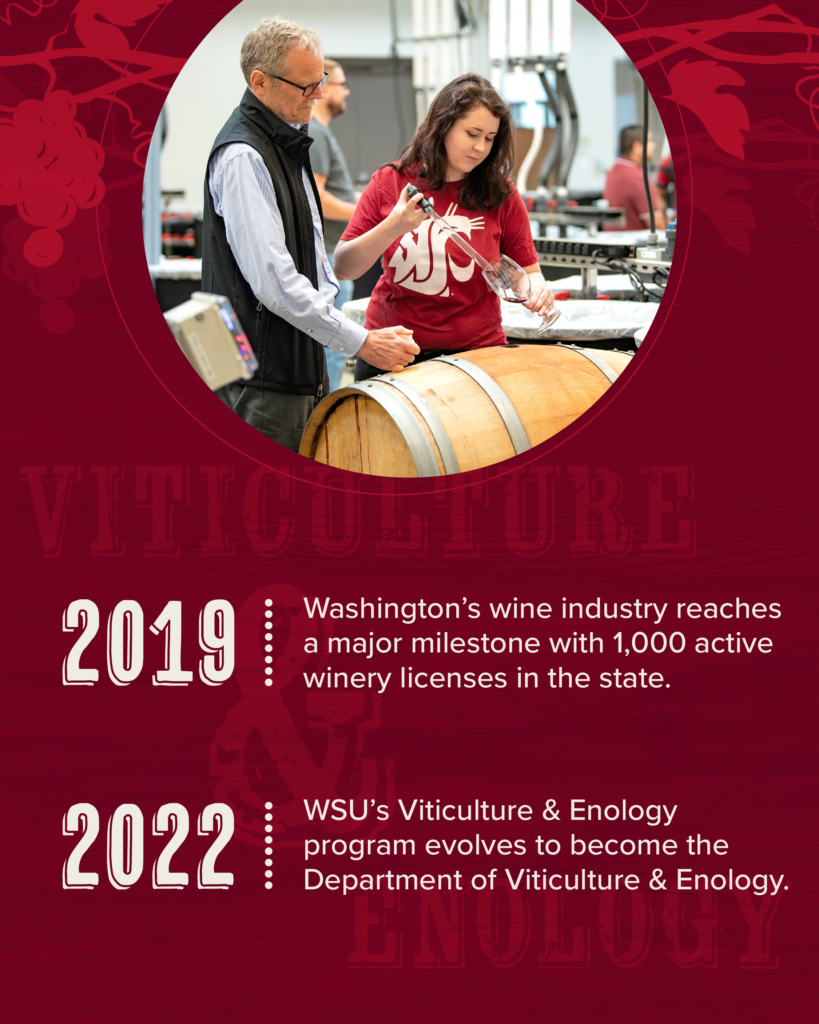
- 2019: Washington’s wine industry reaches a major milestone with 1,000 active winery licenses in the state.
- 2022: WSU’s Viticulture & Enology program evolves to become the Department of Viticulture & Enology.
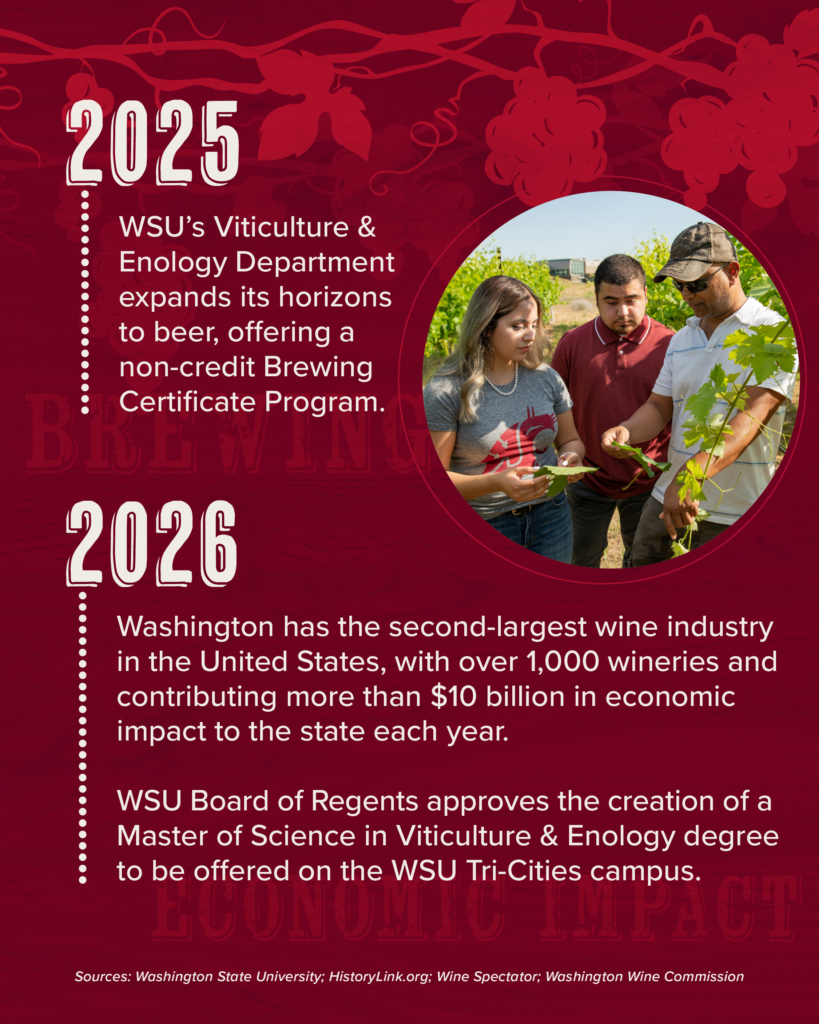
- 2025: WSU’s Viticulture & Enology Department expands its horizons to beer, offering a non-credit Brewing Certificate program.
- 2026: Washington has the second-largest wine industry in the United States, with over 1,000 wineries and contributing more than $10 billion in economic impact to the state each year. WSU Board of Regents approves the creation of a Master of Science in Viticulture & Enology degree to be offered on the WSU Tri-Cities campus.
Sources: Washington State University, HistoryLink.org, Wine Spectator, Washington Wine Commission.
WSU Delivers. Washington State University.
Explore WSU News to learn more about how WSU’s impact goes beyond the numbers.