While Washington State University’s Tri-Cities campus has seen significant development amid deepening its ties with research and community partners, Chancellor Sandra Haynes says there’s still more to do.
Haynes, who took the helm in 2018, has signed on to lead the campus for at least the next four years. Her tenure has seen research partnerships expand and new facilities constructed all while withstanding enrollment headwinds felt by universities nationwide.
“Chancellor Haynes has done an exemplary job in her role leading WSU Tri-Cities,” WSU President Kirk Schulz said. “From navigating the perils of the COVID-19 pandemic to overseeing the continued development of the campus’ research and academic infrastructure, Sandra has proven herself to be an effective leader in the community. I’m confident she will continue to guide the campus through the full optimization of our system structures and beyond.”
The potential for growth and impact Haynes found when she arrived as chancellor continues to keep her and the team at Tri-Cities captivated and motivated.
…we have tremendous opportunities to make an impact here in the Mid-Columbia region and far beyond.
Sandra Haynes, WSU Tri-Cities chancellor
Washington State University
“Because of our closeness to research infrastructure like Pacific Northwest National Laboratories and the vast energy and agriculture resources of our region, we have tremendous opportunities to make an impact here in the Mid-Columbia region and far beyond,” Haynes said.
Having withstood the enrollment challenges brought by the pandemic, WSU Tri-Cities saw its second consecutive year of growth this fall, including a 16% increase in new first-year students. The key, according to Haynes, was bringing recruitment efforts fully in-house and empowering that team to reach out to prospective students and especially those who are historically underrepresented in higher education.
The campus has also deepened ties with PNNL under Haynes’ guidance, including investment in the WSU-PNNL Institutes and joint research in the Bioproduct Engineering Sciences Laboratory (BSEL). Of note is the joint work on Sustainable Aviation Fuels (SAF) and the establishment of the only open testing laboratory for SAF in the United States. Haynes also oversaw the development and launch of the WSU Tri-Cities Institute for Northwest Energy Futures, which is expected to help meet the global challenge of developing sustainable clean energy innovations. The institute, led by Director Noel Schulz, held its inaugural Energy Summit earlier this month.
Looking toward the future, Haynes said she’s excited by the opportunities for further nuclear research and workforce development as part of an overall de-carbonization and environmental justice mission. WSU Tri-Cities will be a major force in this effort in partnership with its county, state and federally-funded partners.
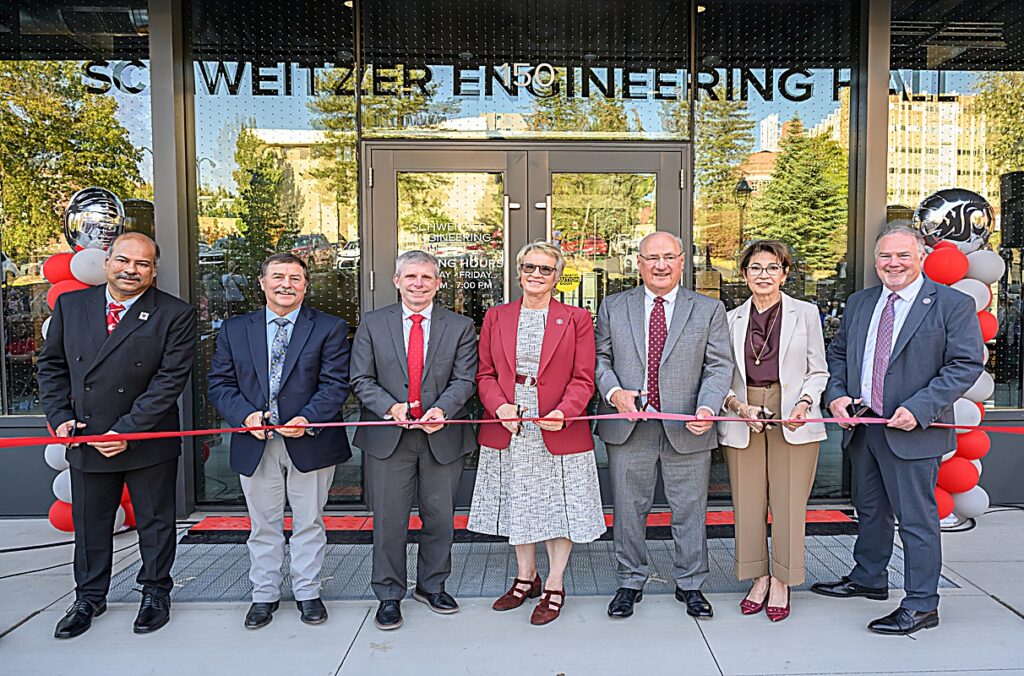
The Tri-Cities campus has also seen significant additions during Haynes time as chancellor, including the opening of Collaboration Hall, a $30 million project funded by the Washington Legislature that features state-of-the-art teaching laboratories and interactive classroom and study areas.
Prior to being appointed chancellor of WSU Tri-Cities, Haynes served as deputy provost and vice president of academic affairs as well as a professor in the Department of Human Services at Metropolitan State University of Denver. She earned a doctorate and master’s degree in experimental neuropsychology from Colorado State University.