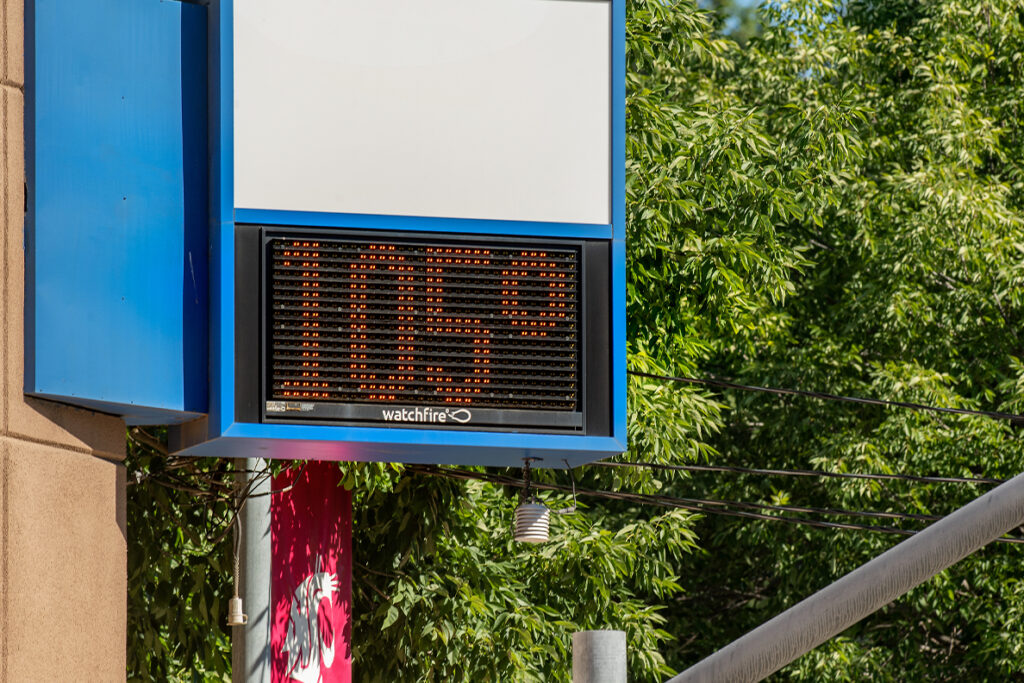
Cranking up the air conditioner isn’t the only way to deal with the record-breaking heat that is blanketing the Pacific Northwest.
Washington State University architect Omar Al-Hassawi is an expert at reducing indoor temperatures without the use of electricity.
His research blends ancient architectural practices with modern innovations to produce surprising results.
Whether you lack an air conditioner or are trying to cut your utility bill, Al-Hassawi can help. Here are a few of his suggestions for beating the heat this summer.
Ventilation strategies
In a climate like the Inland Northwest where temperatures drop by 30-35 degrees Fahrenheit at night, natural ventilation is an effective alternative to blasting the air conditioning.
Opening home windows after sunset and leaving them open until about 10 a.m. the next morning will help flush out the heat generated indoors the day before, Al-Hassawi said.
Conversely, closing windows during the hottest time of the day, from around noon till about an hour before sunset, will minimize heat gain.
Proper shading techniques
Another useful strategy for keeping home temperatures cool is shading exterior windows from the outside instead of the inside with blinds, curtains or even foliage.
“This acts like a hat for the windows similar to how we use hats to shade and protect ourselves,” Al-Hassawi said. “Exterior shading for windows facing south and west is especially effective.”
Home occupants can also wear very light clothing and avoid high heat-generating activities such as intense exercising and cooking meals during the afternoon. A cold shower or placing some cool water in front of a low flow fan are also good ways to create evaporative cooling and reduce indoor temperatures.
No stranger to the heat

Al-Hassawi grew up in Iraq where temperatures rarely dip below 110 degrees Fahrenheit in summertime. For hundreds of years, people in the region incorporated downdraft and evaporative cooling techniques into their architectural designs that harnessed the power of wind and water to keep inside temperatures bearable.
Tall, hollow towers were often placed at the corners of homes to direct breezes down and let warm air escape. Often times, a pool of water would be placed at the base of the towers. As the air flowed over the water, it would evaporate and the air would absorb moisture, becoming cooler before passing into the home. Al-Hassawi said interest in adopting these passive cooling techniques in places like the United States has been on the rise in recent years as annual summer temperatures continue to increase across the country.
“Humans have been using architectural designs and other natural techniques to keep their homes cool for a very long time,” Al-Hassawi said. “We are starting to see a rebirth of a lot of these techniques which is a great thing considering the large role the building sector plays in global warming.”
One idea is to modify the wind tower concept by placing the evaporative cooling mechanism at the top of the tower instead of at its base. As warm air passes into the top of the tower, it would cool down because of the increase in moisture from the water. Then, the cool air would become heavier and drop naturally into the building by gravity.
“The tests I’ve done show that incorporating this type of cooling system into modern homes, particularly in a place like the Pacific Northwest, could bring temperatures down by as much as 30 degrees,” Al-Hassawi said. “So, if it is 100 F outside you can get 70 F inside.”
Media contact:
- Omar Al-Hassawi, assistant professor, WSU School of Design and Construction, 509-335-7315, omar.al-hassawi@wsu.edu