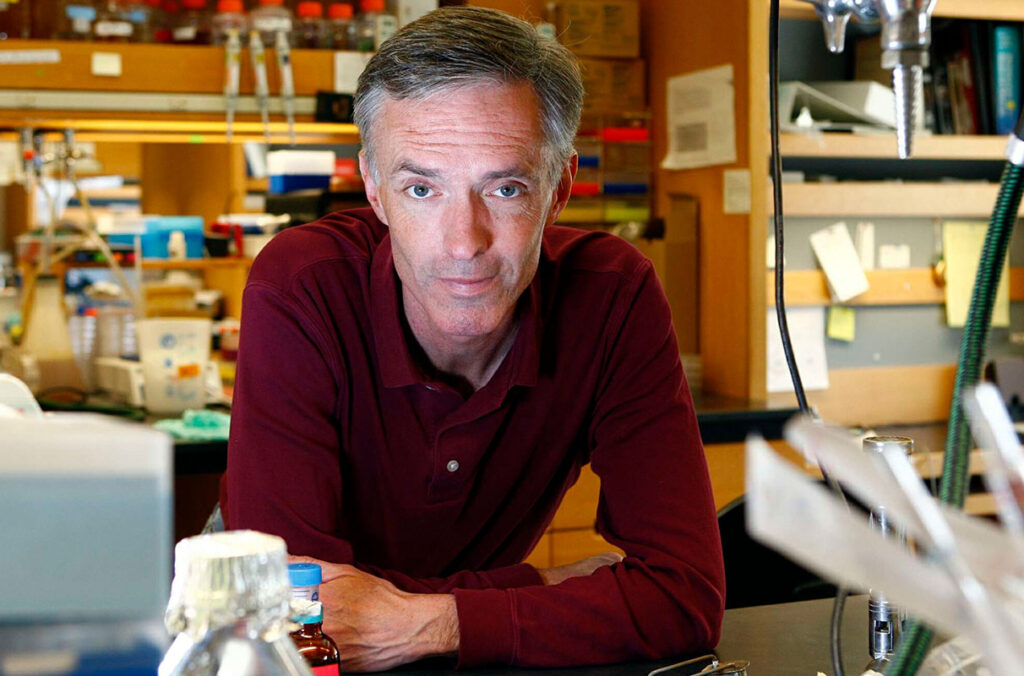
Lonnie Nelson’s work improving the health and well-being of indigenous peoples has earned him grant funding, awards and citations as an academic researcher at Washington State University Health Sciences.
It’s also brought him to a position of vital importance right now: evaluating potential COVID-19 vaccines for how they will be perceived and accepted by Native American and indigenous populations. He was invited to sit on a panel of a dozen scientific experts by the National Institute of Allergy and Infectious Diseases; similar panels have been convened for other populations that have been disproportionately affected by COVID-19.
Nelson was a natural choice for the panel, said Michele Andrasik of the Fred Hutchinson Cancer Research Center in Seattle, who’s leading community engagement efforts for the COVID-19 Prevention Trials Network.
“It’s no surprise his name came up several times” when seeking recommendations for panelists, she said. “Lonnie has a longstanding and unwavering commitment to Native and indigenous populations.”
Nelson said the panel has reviewed a handful of vaccines so far. The group’s most common feedback: to try to make the vaccine one dose rather than two.
“If it’s two doses, it makes access a nightmare for people who are under-resourced,” he said.
He also suggests delivery of a vaccine, when it’s ready, should be done in collaboration with members of Native communities – the same approach he has taken as a researcher.
“If you’re trying to develop any kind of intervention you need to work with people in the community where it’s going to be implemented, or it’s very likely not going to be successful,” he said.
Nelson is co-director of Partnerships for Native Health at WSU, one of the largest research centers focused on Native health in the United States, which is housed within the Initiative for Research and Education to Advance Community Health (IREACH). Research studies include examining the causes and prevalence of disease within the American Indian/Alaska Native population and developing culturally appropriate and feasible interventions.
His mother was a nurse in the Indian Health Service and he’s an American Indian with origins in the Eastern Band of Cherokee Indians. “My friends, family, all the people I cared about growing up were from the Native community,” Nelson said.
He and other IREACH researchers joined WSU from the University of Washington in 2015. Since then, Nelson alone has generated $19.6 million in research activity.
He recently received the Largest New Team Grant award from the WSU Office of Research in recognition of a $9.67 million grant to study Alzheimer’s disease and related dementias in the Native population, with Nelson as the principal investigator.
Last year, before he gained tenure, he was one of two researchers receiving WSU’s Pacesetter Award for pre-tenure faculty who “set new achievement standards in obtaining grants, publications and citations.”
“Dr. Nelson’s work is crucial to help improve the health and well-being of American Indian and Alaska Native adults,” said Celestina Barbosa-Leiker, vice chancellor for research at WSU Health Sciences. “His work will assist in decreasing health disparities and lack of access to healthcare that disproportionately impact American Indian and Alaska Native populations.”
Said Julie Postma, associate dean for research at the College of Nursing, “Dr. Nelson’s work is laudable and contributes to the College of Nursing’s commitment to research that advances health equity.”
Nelson attributes his success as an academic researcher to good training and persistence.
“If you look at the list of my grants submitted that were not funded, it’s a longer list than those that were funded,” he noted.
He also said it’s important to be “pro-social,” a term he prefers to networking.
“Make those friendships, make those connections,” he said. “Think of it as making friends with people who have similar interest and expertise and want to do good things for communities.”