Colony collapse of honey bees is a global problem, one that researchers at Washington State University are working to mitigate by growing the international exchange of ideas and research.
Priya Chakrabarti Basu, assistant professor in the Department of Entomology, has organized a conference for June 6-12 in Pullman, inviting participants from all over the world to discuss colony collapse. Prevention of Honey Bee Colony Collapse (COLOSS) is a borderless group of scientists advocating for bee wellness and coordinating international research toward the well-being of bees. WSU’s effort to expand collaboration across the world is underway to gather anyone associated with bees, not just academics.
COLOSS has held regular conferences, mostly in Europe, to bring the scientific community together to advance cooperation on solving problems affecting growers, the environment, and consumers. This June will mark the first time the group has held a conference in North America, thanks in part to Chakrabarti Basu’s efforts.
Chakrabarti Basu is the North American chair of the bee nutrition task force at COLOSS. She has opened this year’s conference to anyone interested in the work. This includes honey bee researchers, veterinarians, industry, growers, beekeeper hobbyists, or anyone curious about bees.
“I think this is hugely significant, an international meeting for honey bees by honey bee researchers of this caliber, this is the first time in the US.” Chakrabarti Basu said. “I’m very grateful we can host it at WSU.”
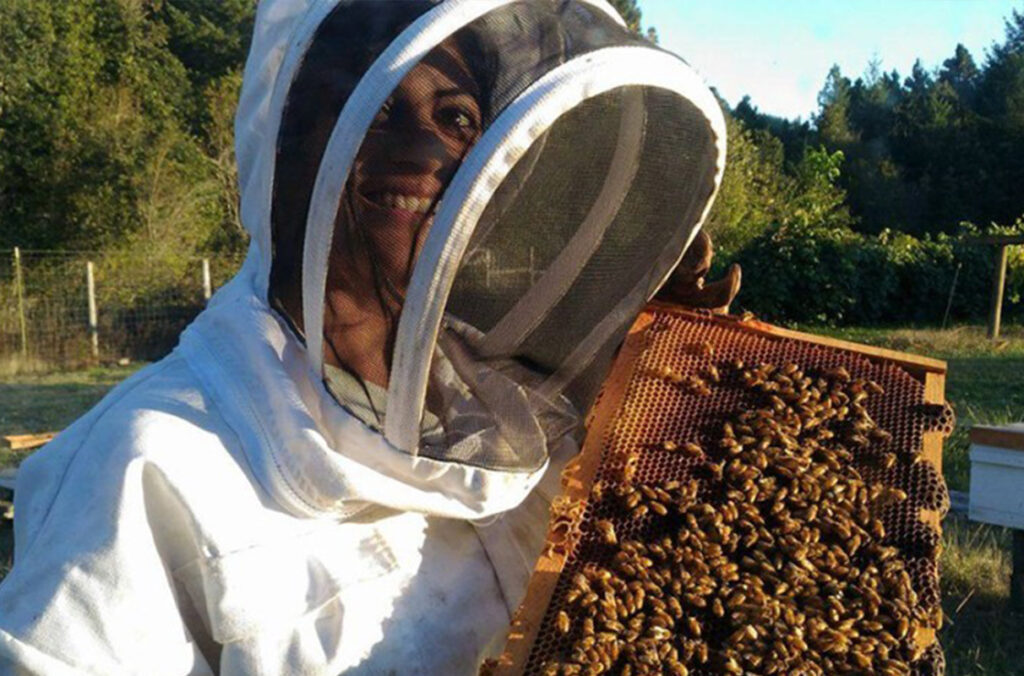
Chakrabarti Basu joined the entomology department last year and has statewide research projects, including at WSU’s Honey Bee and Pollinator Research, Extension, and Education Facility in Othello, Washington. Plus, her recently launched pollen-mapping project, utilizing citizen scientists in every Washington County, mapping pollen varieties and the effectiveness of pollination.
“We are losing wild bees and managed bees throughout the world; it’s a global problem.” Chakrabarti Basu said. “I think we are extremely well-positioned. WSU has a rich history of being one of the top Ag schools.”
Future conferences can be expanded based on the success of this year and the cooperation it fosters worldwide. WSU is known as a central location for this type of research and can benefit from experts assembling to bring new perspectives from their respective regions and interests.
“The bee program has been here (at WSU) for decades in the heart of the pollination region for tree fruits.” Chakrabarti Basu said. “We can do a lot of regional research here, but we are also actually one of the national and global experts on these things.”
The conference has a tentative agenda that includes expert and sponsor talks, as well as hands-on demonstrations and a tour of a commercial beekeeper operation and a commercial grower operation tour at an additional cost.