SEATTLE – Most people living in the United States are relatively disconnected from the ways in which their food is grown, harvested and brought to market, while many of those living in lesser-developed nations experience close interactions with food-producing animals as a routine part of their daily lives.
But because the microbes that cause food-borne illness are ubiquitous and spread readily from animals to people through contaminated meat, water and produce, there is no locale across our planet – nor any forseeable future for its inhabitants – in which the safety of our food supply will not continue to be a critical challenge to public health.
But because the microbes that cause food-borne illness are ubiquitous and spread readily from animals to people through contaminated meat, water and produce, there is no locale across our planet – nor any forseeable future for its inhabitants – in which the safety of our food supply will not continue to be a critical challenge to public health.
So how do the laws, customs and economic realities involved in our food-production system affect the things we eat? What can we do to ensure a safe, affordable and sustainable supply of food for ourselves while respecting the needs of our global community?
These and other vital food safety issues will be addressed in the December presentation of WSU’s ongoing “Innovators” lecture series at noon Dec. 3 in the Spanish Ballroom of the Fairmont Olympic Hotel, 411 University Street, Seattle. Luncheon registration is available online at www.theinnovators.wsu.edu or by calling 877-978-3868. Admission is $45.
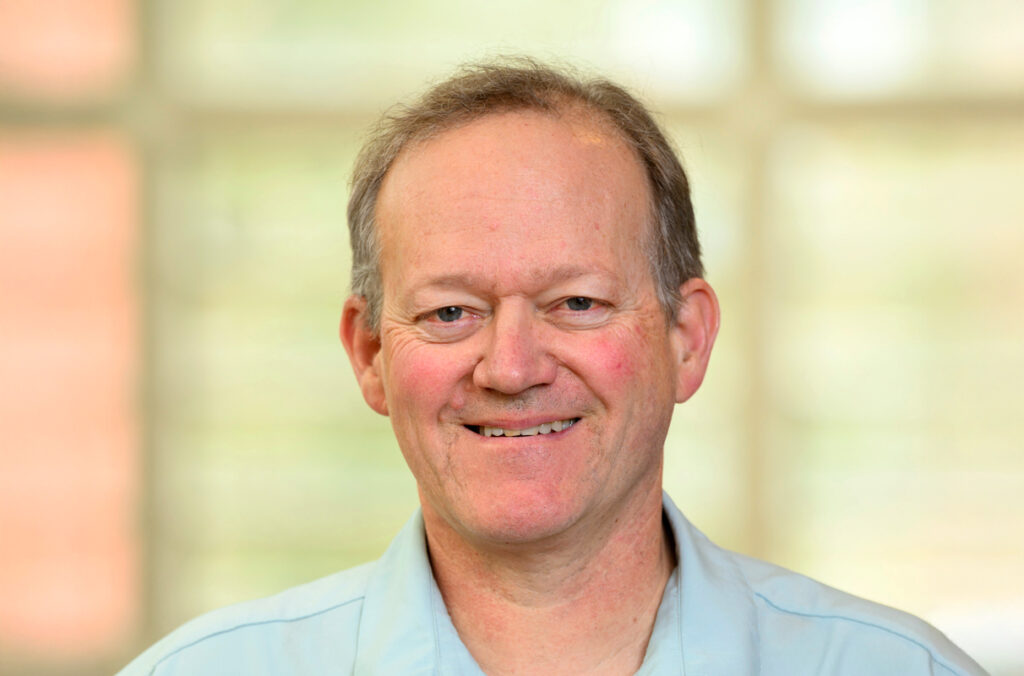
The final WSU Innovators presentation of the year, entitled “Safe to Eat? The Science, Politics and Economics of Food from Farm to Fork,” will feature two leading researchers and authorities on food-borne illness: Tom Besser, professor of veterinary microbiology and pathology, and Bill Sischo, professor of veterinary clinical sciences, both with the WSU College of Veterinary Medicine’s School for Global Animal Health.
Besser, who earned a doctorate in veterinary science at WSU and a doctorate in veterinary medicine at the University of Minnesota, focuses his research on agents that cause human food-borne diseases and the development of practical measures to reduce the prevalence of these agents in animals as a means of reducing human disease risks. In 2001, he was a U.S.-U.K. Fulbright Fellow in Food Safety Research in the operational environment.
Sischo, who earned his doctoral degree in veterinary medicine at the University of California, Davis, and a master’s degree in preventative veterinary medicine and doctorate in preventative medicine at Ohio State University, has pioneered a multi-institutional, interdisciplinary program that integrates the fundamentals of leadership, communication and policy formulation to address the compelling issues that face our global animal health systems. In 2006 he was awarded a fellowship to the National Library of Medicine in Medical Informatics.