In a special partnership program with “Empowered Hosted by Meg Ryan,” a nationally syndicated television segment that sheds light on underrepresented storylines and industry sectors, experts in WSU’s College of Nursing presented the challenges and solutions to addressing national nursing shortages.
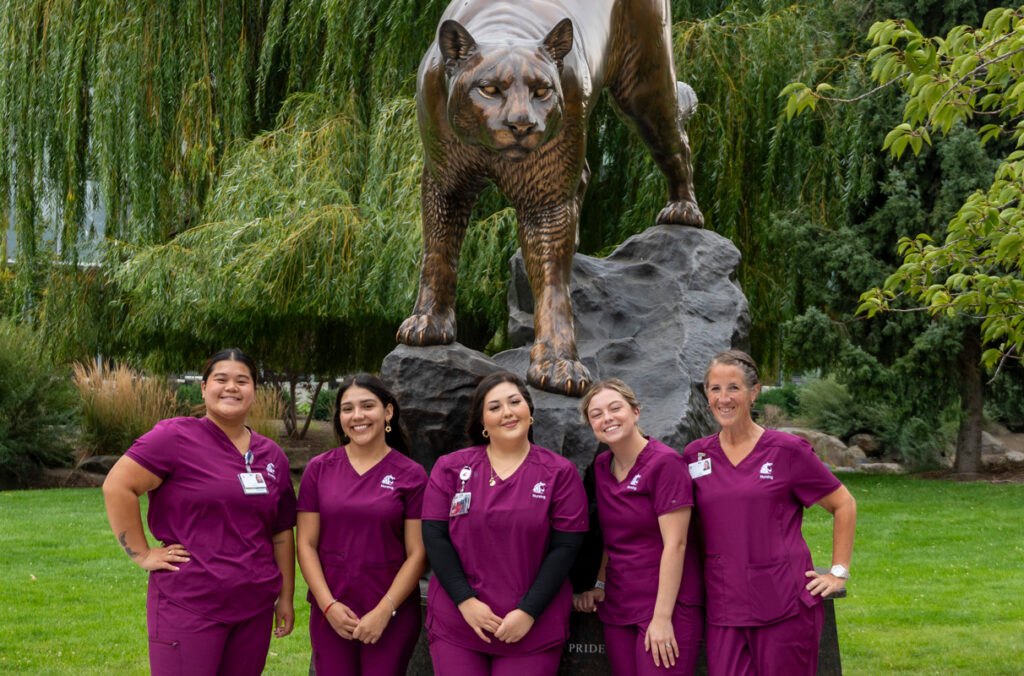
Filmed throughout the fall, the program highlights WSU nursing leadership, students, and practicing alumni, and examines how Coug Nurses and the educators who make nursing programs possible are helping to address this critical workforce gap.
A growing gap
According to the Bureau of Labor Statistics, the Registered Nursing (RN) workforce is expected to grow by six percent over the next decade. However, when considering workforce exits in the required nurse count across the country, more than 193,000 openings are projected each year through 2032. In Washington, the situation is particularly severe. The Health Resources and Services Administration estimates that Washington will experience the nation’s largest nursing shortage, a projected 26 percent gap, in less than 10 years.
Several forces are converging to intensify the strain. Not only is there a significant segment of the current nursing workforce approaching retirement, but these same demographic shifts also signal a population that will need more care as they age, adding further strain to the healthcare system.
The problem isn’t a lack of interest but a shortage of educational capacity. The American Association of Colleges of Nursing has reported that nursing schools across the country are turning away many qualified applicants due to limited faculty and increasing budget constraints. This results in fewer opportunities for people to train to become nurses, even if they want to.
The simulation solution
A key feature of the documentary segment is the college’s Center for Experiential Learning (CEL), an innovative hub for hands-on education where students build competence and confidence. The center mimics a clinical setting, complete with hospital beds, high-fidelity mannequins that can respond as a human patient would, and trained actors that follow a patient script called “standardized patients.” It serves as a launch pad for a curriculum that is often referred to as “simulation-based education.” This environment allows students to practice and refine essential skills before entering clinical practice.
“Increasing simulation education opportunities is one of the best ways to scale nursing education and increase the number of students in our program,” said Anne Mason, interim dean for the College of Nursing. “This vital bridge between classroom knowledge and clinical readiness allows our educators to mirror the complexities nurses face every day.”
Increasing simulation education opportunities is one of the best ways to scale nursing education and increase the number of students in our program.
Anne Mason, interim dean
College of Nursing
Washington State University
Importantly, simulation-based education expands the nurse training pipeline by easing the burden of training in clinical or hospital settings. Gaps in the healthcare workforce can strain already overloaded rural hospitals and busy urban clinics, creating a shortage of staff available to train students on-site.
Simulation-based education also ensures that students are prepared for their clinical rotations, ready to meet patients’ needs from day one. This strong foundation reduces both student and provider burnout, improves patient satisfaction, and enhances the capacity for nursing education.
To further strengthen its simulation education practices, the college is seeking national endorsement from the International Nursing Association for Clinical Simulation and Learning, which verifies that it follows the highest standards of evidence-based simulation practices.
“Securing this endorsement is a key strategic priority that will help enable us to meet our goal of delivering up to 50% of curriculum hours via simulation by 2029,” Mason said.
Scaling for the future
Thanks to increased industry awareness efforts, the nursing workforce shortage has gained the attention of both federal and state policymakers, leading to better planning and more investment in healthcare education. In Washington, statewide retention initiatives and fast-track programs are underway to address shortages of both RNs and nurse educators.
Additionally, nursing schools across the country, including WSU’s College of Nursing, are forming strategic partnerships to highlight careers in nursing and secure private support to expand student capacity. One example of this is shared faculty positions that are jointly funded with Providence.
The key, however, to educating successful nurses remains ensuring that students learn to be compassionate, adaptive, and responsive to patients’ needs. Simulation-based education provides ample opportunities for students to practice and refine these important skills.
“The strongest nursing education does more than impart facts; it cultivates the ability to think critically and adapt under pressure, to connect meaningfully with patients and families, and to lead with integrity,” Mason said. “Meeting the need for exceptionally qualified nurses requires innovation in education, sustained investment, and a forward-looking commitment to excellence.”
The “Empowered Hosted by Meg Ryan” documentary segment will air on public television stations nationwide over the next 12 months, with additional commercial spots running on network television. To learn more about the College of Nursing’s latest education initiatives, visit nursing.wsu.edu.