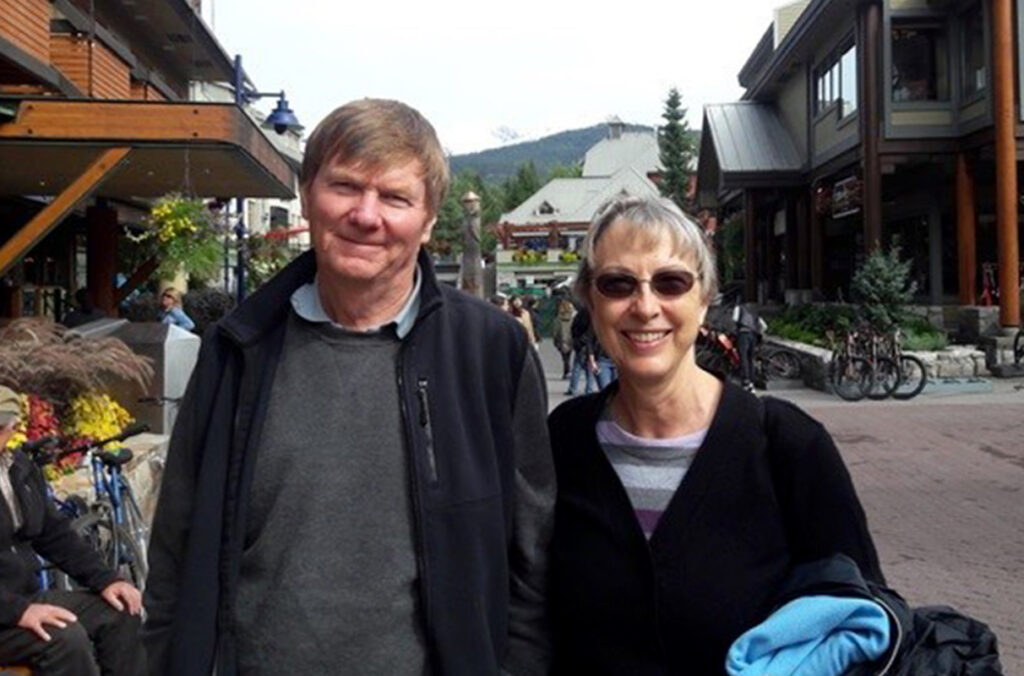
The newly founded Barbet Family African Graduate Student Travel Fund aims to enhance training opportunities for African graduate students in collaborative programs with the College of Veterinary Medicine.
The endowment is one of the many legacies Dr. Anthony “Tony” Barbet leaves behind after his death to cancer in February 2024 that illustrate his longstanding commitment to research into infectious disease, education, and mentorship. Established by Tony’s wife, Dr. Joy Barbet (’82 DVM), and their family — the fund will provide financial assistance for travel expenses, enabling students from Africa to participate in short-term stays at WSU where they can further their research training and mentorship.
“This is a great way to honor what he did in his life and continue his legacy,” Joy said. “I felt it was important to remember Tony by extending his impact in a way that emphasized his commitment to research on infectious diseases of relevance to Africa and his commitment to training graduate students. WSU, the College of Veterinary Medicine and the Paul Allen School for Global Health are a natural fit.”
While Tony spent most of his career at the University of Florida, Pullman and WSU always held a special place in his heart. Not only did he hold a research position at WSU from 1980 to 1986, but it is also where he met and fell in love with Joy, who was attending veterinary school at the time.
I felt it was important to remember Tony by extending his impact in a way that emphasized his commitment to research on infectious diseases of relevance to Africa and his commitment to training graduate students.
Dr. Joy Barbet (’82 DVM)
“In June of 1980, I started my senior year in vet school doing clinical rotations. Later that summer, my roommate had a barbecue party and had invited Tony, who was her intramural soccer coach,” Joy said. “That is where we met. We just hit it off, and two years later we were married.”
The couple moved in 1986 to Gainesville, Florida, where Tony led a research group on tropical, vector borne diseases, including African sleeping sickness and heartwater of sheep and cattle in Africa and the Caribbean Islands, while Joy practiced veterinary medicine.
Tony remained at the University of Florida for 30 years leading research on several related tick borne rickettsial diseases of animals and humans while training numerous graduate students and post-doctoral researchers.
During the 30 years Tony spent at the University of Florida, he maintained strong collaborative relationships with researchers and faculty in WSU’s College of Veterinary Medicine, including in the Allen School, which is renowned for its work with infectious diseases affecting both animals and humans.
Tony was passionate about his research and mentoring aspiring scientists. Joy said he was particularly fond of guiding graduate students from places like Africa, where the research infrastructure and access to specialized training and mentorship can be limited.
“This fund helps remove barriers and provides these students with access to mentors and opportunities to collaborate with researchers at WSU, where they can gain invaluable experience in things like bioinformatics, DNA sequencing analysis, and protein structure modeling with AI,” Joy said.
Tony’s own academic journey began at the University of London — Queen Elizabeth College, where he earned his bachelor’s degree, followed by a doctorate in biochemistry from Cambridge University. In 1976, he joined the United Nations’ International Laboratory for Research in Animal Diseases in Nairobi, Kenya, where he worked for four years before taking a research position at WSU.
Among his many great attributes, Joy said, Tony was a lifelong learner. He continually expanded his expertise, moving from protein biochemistry into DNA sequencing and bioinformatics. Even in his final months, he remained engaged in his research, completing a draft of a paper analyzing genetic sequences of multiple Anaplasma strains just before his passing. The manuscript has been submitted to the journal Pathogens for publication.
Beyond his scientific achievements, Tony was a devoted husband, father and friend.
“He never stopped working, never stopped learning,” Joy said. “But more than that, he was kind, he was generous, and excellent father and husband, and he made me a better person just by knowing him.”