On the early morning of Feb. 24, 2022, Anna Kyslynska was asleep with a wakeful ear tuned for any sound from her 1-year-old son, who woke up several times a night. Her cat slept by her side in her comfortable bed. An album of her son’s first-year milestones she had assembled the night before sat on her kitchen table in their apartment in the city of Chernihiv in Ukraine.
Then came a loud noise from outside and the sound of the warning siren, followed by the mad scramble to pack clothes, documents, her son’s album, and her laptop that contained all her research data — the foundation of her career as an agricultural microbiologist, which would eventually lead her to Washington State University. Kyslynska fled the building with her husband, holding her son in one arm and the cat in the other.
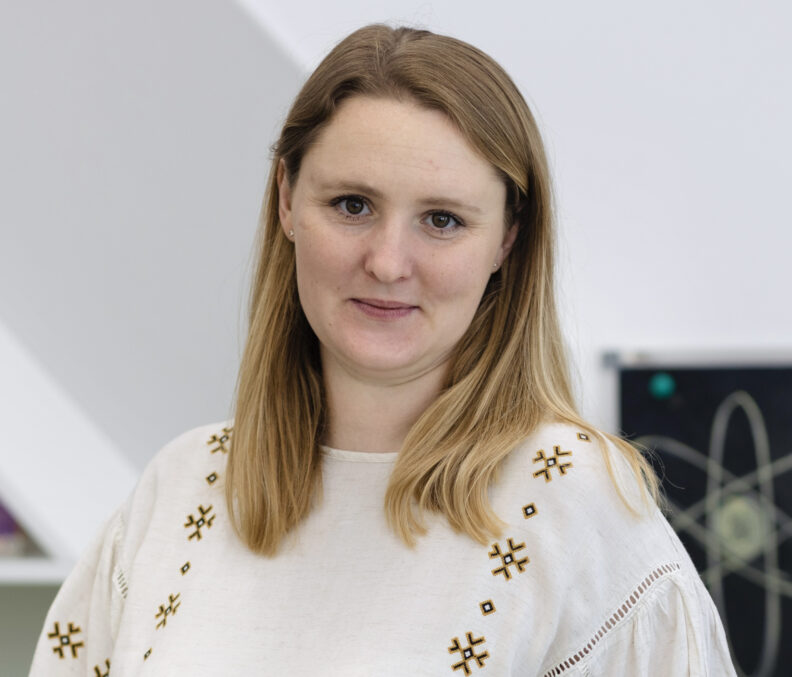
“Only in the car did I start breathing again,” recalled Kyslynska, who is today a postdoctoral research associate in the WSU College of Agricultural, Human, and Natural Resource Sciences. “I realized we had fled in our pajamas. I saw other families with children rushing into their cars, while others, still unaware of what was happening, were taking out the trash in slippers, walking through the snow.”
She and her family remained in Ukraine for a year after that terrifying morning before coming to the United States in April 2023.
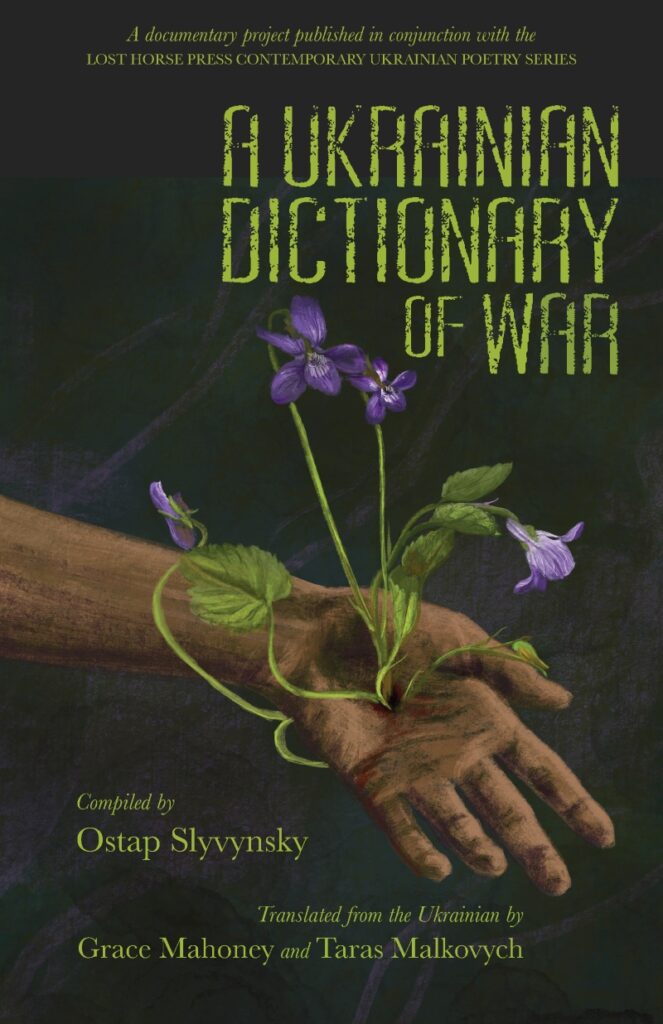
Kyslynska will give a reading during an event titled, “Language of Testimony: Readings from A Ukrainian Dictionary of War,” on the third anniversary of Russia’s full-scale invasion of Ukraine at the Terrell Library atrium during a WSU Libraries event from noon–1 p.m. Monday, Feb. 24. Copies of the book, published by Lost Horse Press and distributed by WSU Press, will be available for sale at the reading.
An evolving language
Compiled by poet Ostap Slyvynsky and organized by the 33 letters of the Ukrainian alphabet, the dictionary attempts to capture words whose meanings have been transformed by the war itself, said Gabriella Reznowski, WSU business and economics librarian and event co-organizer. Words that once carried tender connotations, like solodke (sweets) and аlycha (cherry blossom tree) are now colored by the experiences of Ukrainians facing continued Russian aggression.
One entry, “Tank,” documents the resistance of the Ukrainian people, even in the face of Russian military operatives, as told by Olena, from Bucha: “A man with a military bearing but wearing civilian attire, who was walking through the crowd, gave me a close I’ll remember you kind of look. I responded with the same look, and he understood that I would gladly dance on their graves. I’m a patient woman. I will wait.”
“The effect of reading the individual entries places the reader in the shoes of the witnesses, and even after one puts the book down, the intimate insights they provide continue to echo and resonate, like dozens of simultaneous whispers,” Reznowski said.
A kind of ecocide
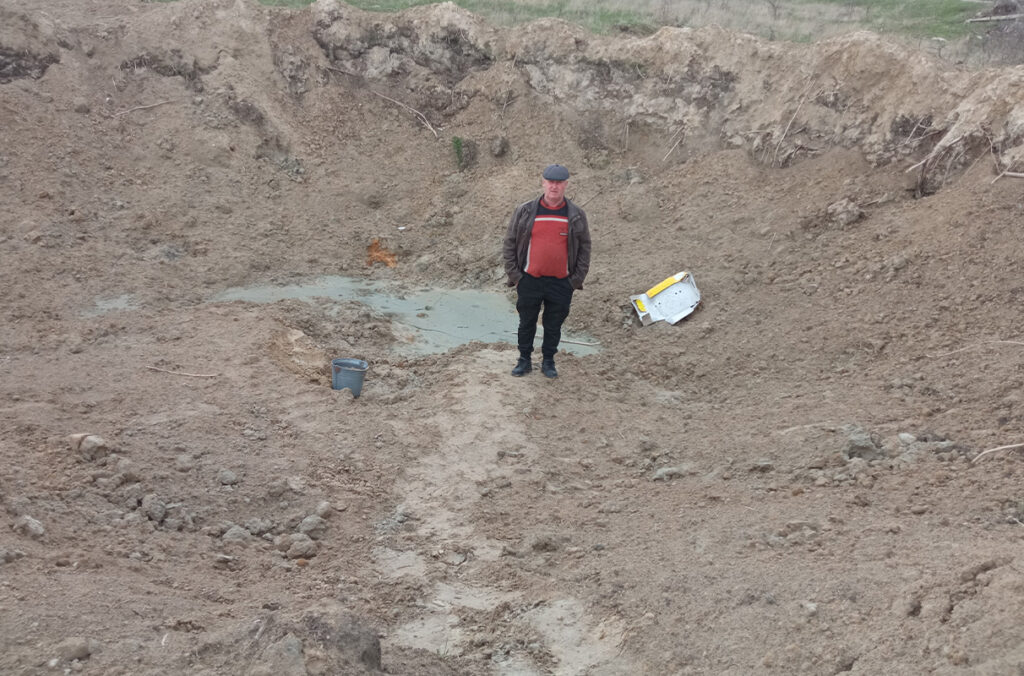
When Kyslynska thinks of her native land, she remembers her parents’ house, the garden, and the fields and forest around it. In early April 2022, when her parents returned to the home they abandoned in the early days of the invasion, they replaced all the broken windows, fixed the roof full of holes, and more. But the beautiful land was scarred by the military battles waged over it.
“They looked at the huge craters in the ground from airstrikes, waited for the tank shells to be pulled from our land, and then replanted the garden and sowed grains,” Kyslynska said. “My beloved forest remained mined.”
As a researcher, Kyslynska understands only too well what this devastation means. According to various sources, 22–36% of the land has been negatively impacted by Russia’s actions, leading to changes in the soil microbiome, contamination with heavy metals, decreased fertility, loss of arable land, and threats to food security, as well as many potential, unpredictable consequences.
“For more than 10 years, I studied, and later became a scientist, at the Institute of Agricultural Microbiology and Agro-Industrial Production in Chernihiv,” Kyslynska said. “I took care of soil health and implemented biological methods for increasing crop yields and plant protection, which makes this topic incredibly painful for me.”