Washington State University’s worldwide efforts to use advanced gene-editing techniques in livestock to improve productivity and food security were recently showcased during the largest consumer technology trade convention of the year, the Consumer Electronics Show.
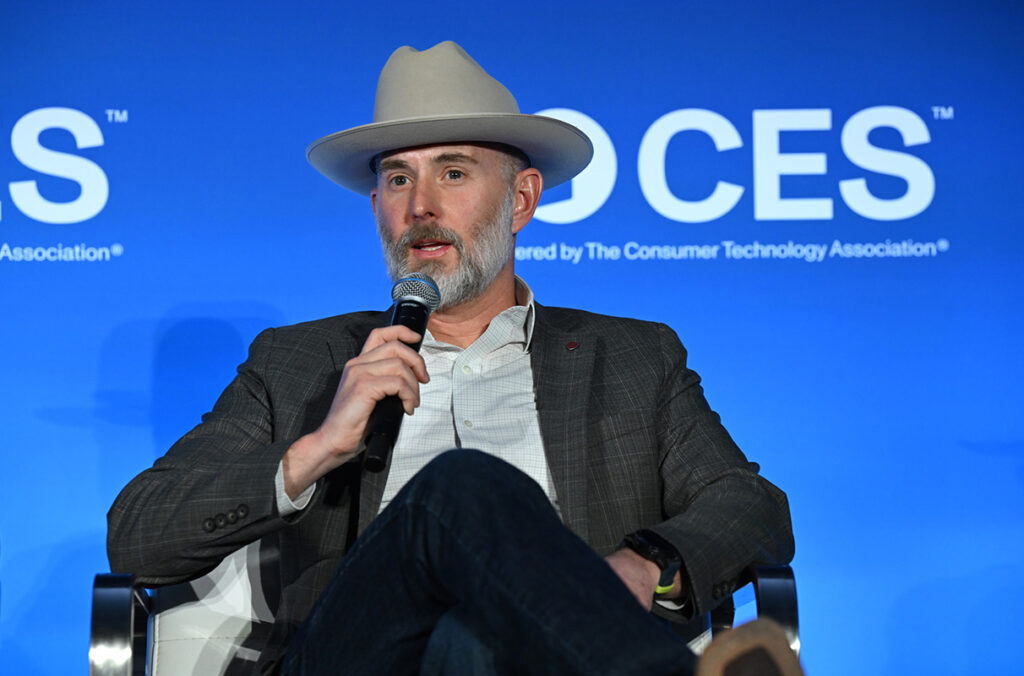
Jon Oatley, a professor and associate dean of research in WSU’s College of Veterinary Medicine, was one of three speakers invited to participate in a panel discussion titled “Pink pineapples and pitless cherries: Gene-editing and the future farm” during the annual conference in early January in Las Vegas. The convention featured 4,500 exhibitors and more than 140,000 attendees.
“This was a huge platform to showcase the research we are doing here at WSU and in the College of Veterinary Medicine,” Oatley said. “I was invited to participate because of the reputation we have built at WSU in gene editing and food animals and our efforts to create food security for the growing global population. The science we are doing has huge potential to impact the world directly.”
The science we are doing has huge potential to impact the world directly.
Jon Oatley, professor and associate dean of research
WSU’s College of Veterinary Medicine
The panel featured two additional speakers who focused on gene editing in crops, while Oatley spoke about advancements in livestock. Oatley is renowned for his work in gene-editing technologies and his research efforts on genetic innovations in livestock to address the growing demand for sustainable food production. He highlighted how WSU is at the forefront of developing gene-editing strategies for food animals to make them more resilient to infectious diseases and environmental changes, while also improving animal welfare and reproductive efficiency.
The panel also explored the public perception of gene editing in food production, which Oatley described as less contentious than some might expect.
Oatley pointed to his own research using the gene-editing tool CRISPR to improve genetic traits in livestock. In 2023, he and WSU received U.S. Food and Drug Administration investigational authorization to have five gene-edited pigs enter the food chain for human consumption. Since, he has continued to work toward a full FDA approval. Oatley said negative comments from the pubic have been limited.
“I think the general public, by and large, wants food that is as cheap as possible, nutritionally sound, and safe,” Oatley said. “Most people aren’t as concerned with gene editing in production as the vocal minority that often speaks out about how food is produced.”
Oatley and the panel also discussed regulatory challenges, noting that current systems in the U.S. and globally were designed years ago and have not kept pace with scientific advancements like gene editing. These outdated regulations, Oatley said, can act as barriers to commercialization and advancements.
In addition to providing a platform to promote WSU’s research, the convention also put Oatley face to face with industry leaders, which could open doors to future opportunities for collaboration.
“Making those connections to the private sector and the industry is really important,” Oatley said. “Even though I’m there representing an academic institution, I’m still talking about research and development and the things that we’re doing that would have commercial appeal down the line.”