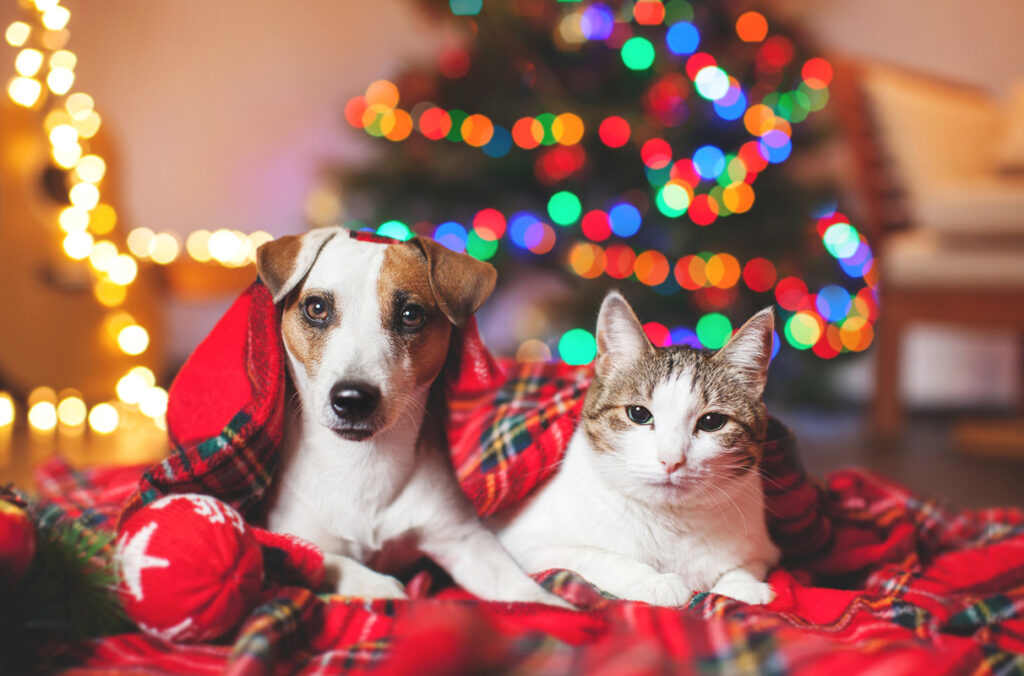
The holiday season is a joyful time of year filled with celebrations, decorations, and gatherings, but it can also present unique hazards for pets. A little planning and awareness can help ensure pets stay safe during the festivities, according to Washington State University veterinarians.
Dr. Cassidy Cordon, a community practice veterinarian at WSU’s Veterinary Teaching Hospital, shares valuable advice on how to navigate the holidays with pets in mind.
“It is easy to forget about our pets with the chaos of having visitors, changes to our schedule, traveling and introducing new household items such as decorations and gifts,” Cordon said. “Ensuring your pet has had an annual health check with your veterinarian and is current on preventatives and vaccinations prior to travel or having visitors is an excellent start. Keeping a copy of your pets’ current medical records, especially if traveling, is particularly important.”
Plan for emergencies
Emergencies are unexpected, which is why pet owners should always be prepared. This is especially true during the holidays when people are traveling and many clinics reduce their hours. Keep important contact numbers — like a veterinarian’s office, the nearest 24/7 emergency clinic, and animal poison control hotlines — in an easy to access place.
It is also important to ensure pets have a collar with up-to-date identification. If a pet is not already microchipped, consider doing so, as it improves the chances of a lost pet being returned home.
Deck the halls
Ribbons, wrapping paper, ornaments, tinsel, extension cords, candles, and gifts can add to the holiday spirit in the home, but they can also be irresistible to curious and mischievous four-legged friends, with sometimes dangerous consequences.
“Many of these items only come out once a year and it is natural for pets to be curious and want to inspect these changes to their habitat and home,” Cordon said.
Take precautions to avoid accidents:
- Christmas trees: Anchor trees securely to prevent them from toppling over. Keep pets away from tree water, which may contain harmful fertilizers or bacteria.
- Toxic plants: Mistletoe and holly can cause serious and even fatal issues if ingested. Lilies are especially hazardous, as the flowers can cause kidney failure in cats. Poinsettias have received bad publicity in the past, but the flowers are not very toxic to pets. Poinsettias do contain a milky sap that can irritate the mouth, but symptoms are usually mild if developed. Consider using artificial versions or placing real plants out of reach.
- Ornaments, tinsel, and lights: Pets may chew on cords, risking electric shock. Secure cords and use pet-safe covers. Avoid low-hanging ornaments that might be mistaken for toys or food. Cats, in particular, can’t help themselves when it comes to shiny strands of Christmas tree decor. Although the sight of a cat pawing at the tree may be cute, the ingestion of tinsel can be deadly.
Holiday meals: No table scraps for pets
Many pets love human food and it can be hard to resist slipping a piece of turkey under the table. While some foods in very small quantities can be safe, some dishes can give a pet an upset stomach or something worse, like pancreatitis.
Protect pets by keeping the following off their menu:
- Rich foods: Fatty dishes can lead to vomiting, diarrhea, or even pancreatitis.
- Bones: Turkey and ham bones can splinter, causing choking or blockages.
- Toxic foods: Grapes, raisins, macadamia nuts, and chocolate are poisonous to pets.
- Foods containing xylitol: Read ingredient labels carefully, as this popular sugar substitute is highly toxic to dogs and can cause serious and fatal health issues.
Dispose of scraps securely in sealed bags or locked trash bins and remind guests not to feed pets table scraps or leave plates unattended.
Managing guests and holiday chaos
Changes to schedules and streams of visitors can overwhelm pets. Set clear rules for guests and ensure any food or personal items (like medications or edibles) are stored safely out of reach.
Give pets quiet, comfortable retreats, such as a separate room or crate, where they can escape. Provide familiar toys, bedding, and water to make them feel secure.
Beware of noise and fireworks
While fireworks are more common around New Year’s Eve, loud holiday celebrations can also frighten pets. To minimize stress:
- Keep pets indoors during loud events.
- Use calming aids such as pheromone sprays, anxiety wraps, or music designed for pets.
- Ensure your pet’s retreat is as quiet and insulated from noise as possible.