At A relevant message — The concerns that Edward R. Murrow expressed about the media and the news business five decades ago still resonate today, said Susan Ross, an associate professor in the Edward R. Murrow School of Communication, associate dean for the “Murrow decried the dominance of corporate objectives over news values and longed for the early days of his career ‘when the fear of a slight reduction in business did not result in an immediate cutback in bodies in the news and public affairs department, at a time when network profits had just reached an all-time high,’ Ross said, citing Murrow’s comments in a 1958 speech to the Radio & Television News Directors Association. “It was tragic, in his eyes, that broadcasters apologized rather than advocated hard-hitting critical news reporting that inevitably offended some and distressed the powerful.” “I am frightened by the imbalance, the constant striving to reach the largest possible audience for everything; by the absence of a sustained study of the state of the nation,” Murrow said. “(U.S. Journalist) Heywood Broun once said, ‘No body politic is healthy until it begins to itch.’ I would like television to produce some itching pills rather than this endless outpouring of tranquilizers.” Ross said, “Even today, many would agree with his famous conclusion to 1958 speech: ‘This instrument can teach, it can illuminate; yes, and it can even inspire. But it can do so only to the extent that humans are determined to use it to those ends. Otherwise it is merely wires and lights in a box.’” Ross can be reached at: 509.335.3854 or suross@wsu.edu Murrow moments — Glenn Johnson, professor in the In writing for the general audience, one Murrow moment uses this Murrow quote: “Imagine you are telling a story to a professor at dinner while the maid’s boyfriend, a truck driver, was listening from the kitchen. Describe things in terms that make sense to the driver without insulting the professor’s intelligence.” Students take a radio news class before a television news class. This quote from Murrow applies: “Writing for television is not unlike writing for radio. It must be the language of speech, lean copy, sparing of adjectives, letting the pictures and the action and the indigenous sound create the mood, and then maybe a few words–the fewer the better.” And Johnson said he uses this Murrow quote to remind students of the dangers of egos in the news business: “Unless you watch it, there is a tendency for you to think that because your voice and your picture are transmitted from one end of the country to the other, you’re more intelligent and more important than you were when your voice only reached from one end of the bar to the other.” Johnson is available at 509.335.3068 or galjohns@wsu.edu Sinking standards? Edward R. Murrow is remembered for his high journalistic standards, standards which the public seems to believe are now in decline. John Irby, an associate professor in the Murrow School with more than 25 years professional newspaper experience, believes the media is neither more or less credible than it has been, on average, throughout history, yet perception makes credibility a serious problem. “When the media has accuracy perceptions, it has credibility problems,” Irby said. “There are real issues of credibility today because of people like Jayson Blair, formerly of The New York Times, and Jack Kelley, formally of USA Today, and too many others who have been publicly flogged for plagiarism or creative fictionalized news reporting or other journalistic sins. But we can’t forget history, including the “yellow journalism” period and the pranks and serious ethical breeches of Hearst and Pulitzer during that era.” Irby, who has worked with the Associated Press Managing Editors Credibility Roundtables Project, said, “Today’s media might be at its highest level in overall quality, despite some serious problems. The more dramatic change, however, has been with society and the media consumer. Expectations, demands and exposure are different and that’s why there will never be another Murrow. The public used to trust people like Murrow and Walter Cronkite and newspaper leaders like Jack Knight. While they were media giants, they were flawed people, just like the rest of us, but the media today practices in brighter sunshine which fosters less blind trust. Ultimately, that is a good thing.” Irby is available at 509.335.1547 or jirby@wsu.edu Today’s Murrows? Could the journalism of Edward R. Murrow find a place in today’s more corporate media environment? David Demers, associate professor in the Washington State Magazine — For a look at Murrow’s leadership in the decision by CBS News to take on Sen. McCarthy, read “Where Have You Gone, Edward R. Murrow?” by retired WSU professor Val Limburg. The article in the recent issue of Washington State Magazine also explores some of the key influences on Murrow’s life and values, including his education at
Next Story

Extreme microbe may change how apples are protected
A compound derived from an extreme microbe is being tested by WSU researchers as a potential new way to protect apples from fire blight and Listeria, offering a more durable alternative to current treatments.
Recent News
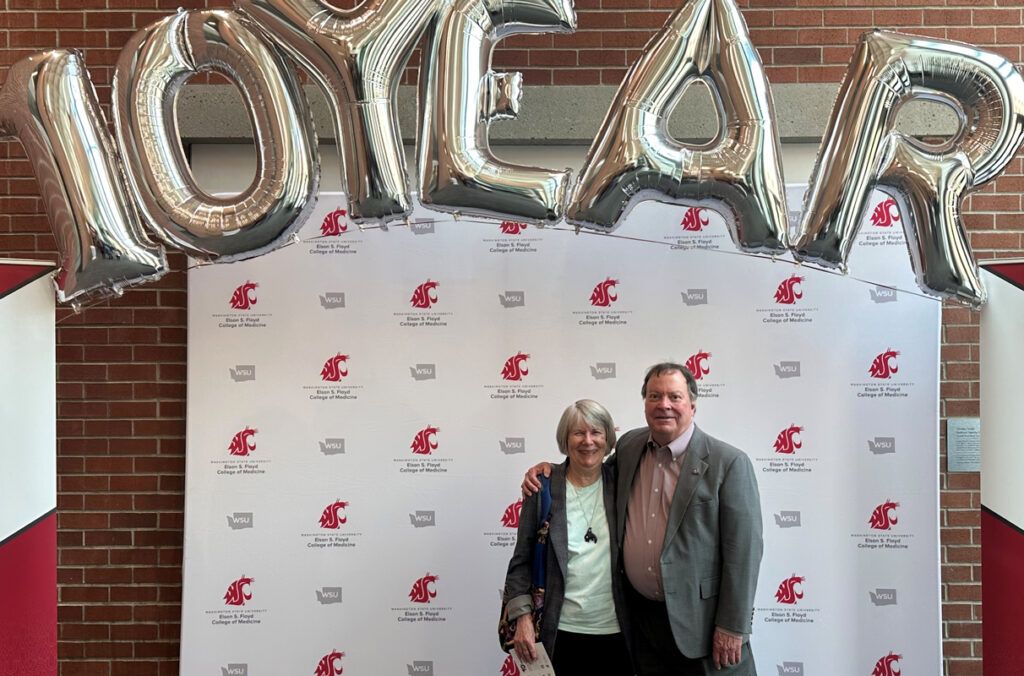
Donor-funded $2 million scholarship match supports future doctors at WSU College of Medicine
The funding, provided by longtime WSU supporters Tom and Barbara Wilson and first-time donor Barbara Stephanus, will match philanthropic contributions to student scholarships through the college’s Medicine Multiplied campaign.
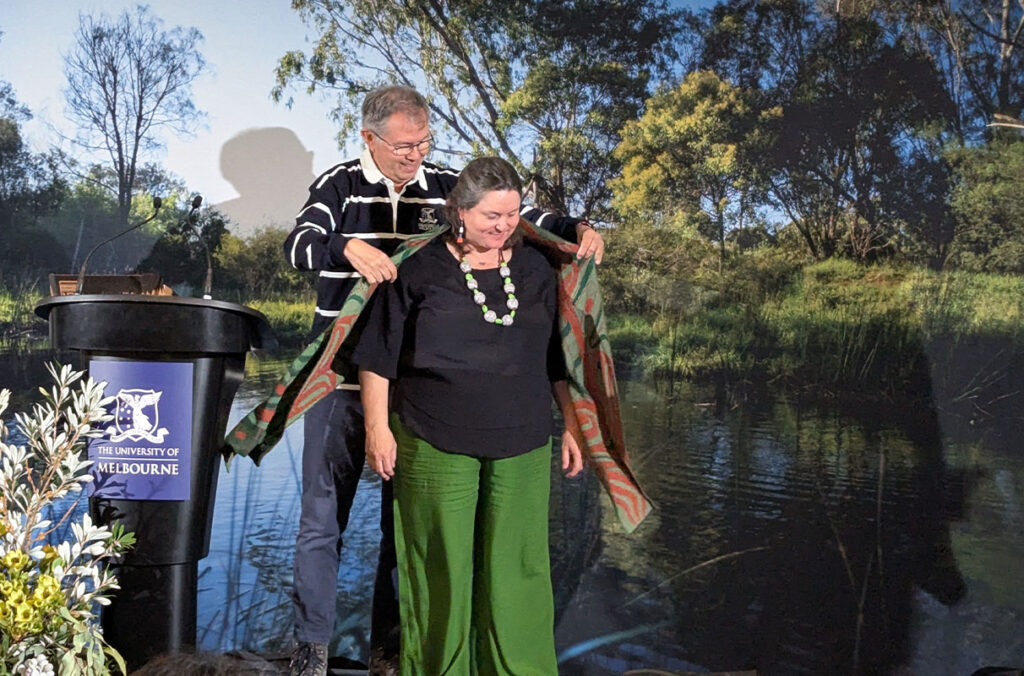
Joseph Scott Gladstone advances global collaboration in Indigenous business research
WSU scholar Joe Gladstone is partnering with the University of Melbourne to advance global research on how Indigenous values shape business leadership, entrepreneurship, and community-focused decision-making.

Selling the city: students elevate Vancouver’s tourism strategy
WSU students partnered with Visit Vancouver to develop real-world tourism strategies, identifying new event opportunities and marketing ideas that highlight the city’s growing potential as a regional destination.

Greek Week success provides big support for Pullman downtown businesses
WSU students contributed more than 250 hours of service and raised over $10,000 to support Pullman businesses, strengthening ties between campus and the community.
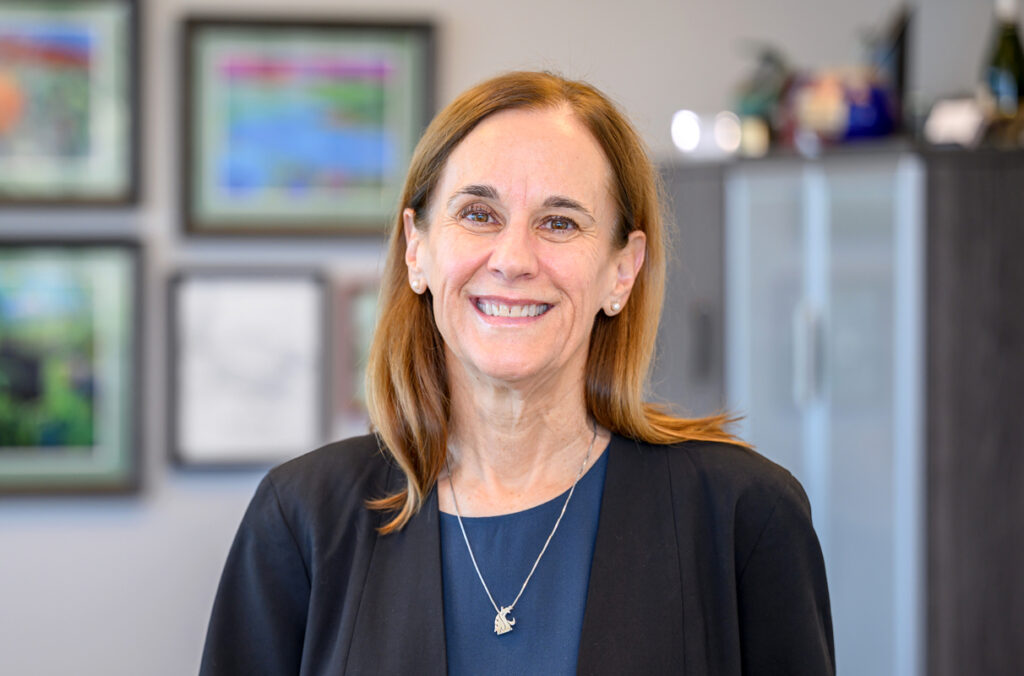
WSU names Sandra Haynes EVP for statewide campuses
The new role aligns leadership and operations at Everett, Tri‑Cities, and Vancouver campuses to better serve students, communities, and workforce needs across Washington.
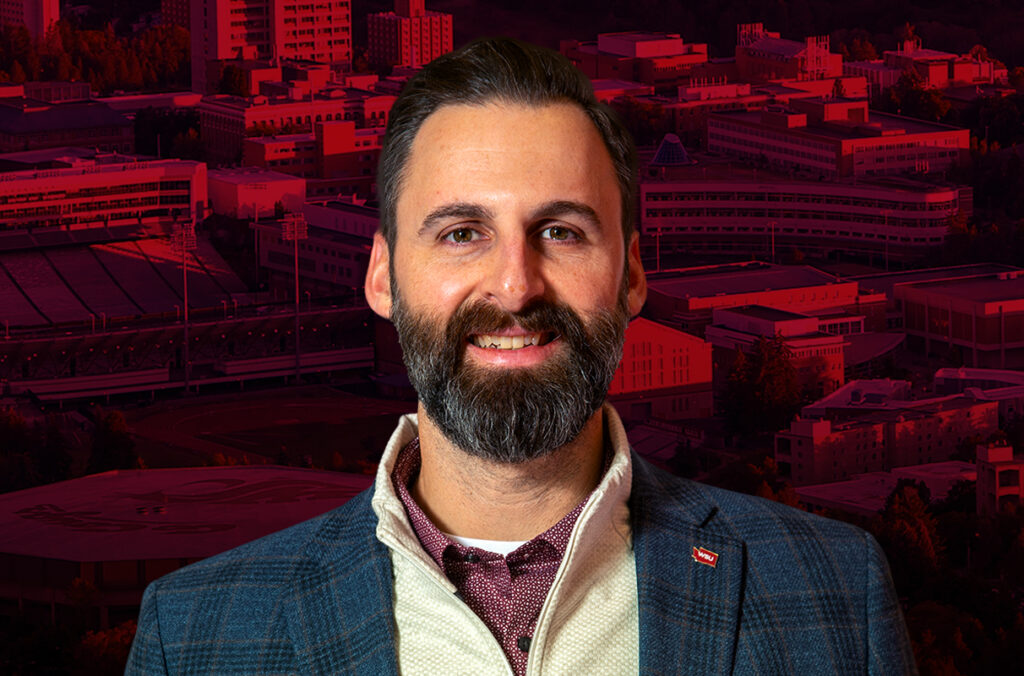
Jon Haarlow to lead Washington State Athletics
Haarlow, who has served as interim athletic director since Nov. 12, 2025, will be introduced at a press conference in the Alger Family Club Room at Gesa Field Monday, April 20, at 11 a.m.